The volume of a sphere is the cube of the radius, that means that as the earth radius has doubled since the beginning of the mesozoic, the volume has increased 8-fold.

In all likelihood, this volume increase is the result of the mass of the Earth being pushed outwards, forming a hollow cavity in the center of the planet, and not an 8-fold increase in mass.
The gradual decrease in speciation rate and increase in extinction rate in dinosaurs throughout the Cretaceous Era, fits perfectly with the rapid increase in Earth radius and formation of oceanic crust in that same time period. The same force that caused the Earth to grow, also led to smaller life-forms.
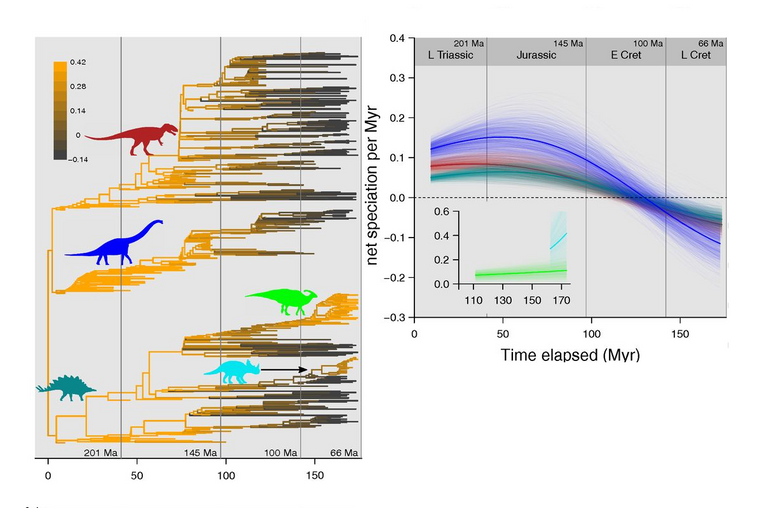
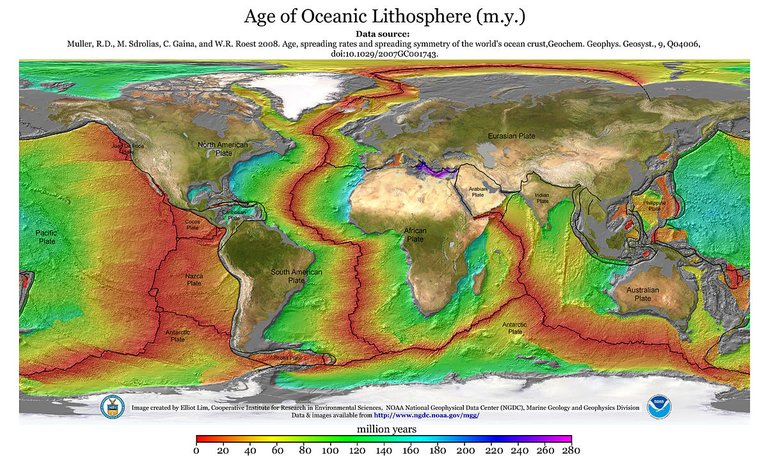
From the decline in dinosaur speciation as well as increase in Earth radius, it can be deduced by reasoning that the electromagnetic field of the Earth, powered by sun-Earth Birkeland currents, increased throughout the Cretaceous. The increased electrostatic force per Coulomb's inverse-square law, F=k(q1q2)/r^2, favoured smaller lifeforms.

References
Sakamoto, M., Benton, M. J., & Venditti, C. (2016). Dinosaurs in decline tens of millions of years before their final extinction. Proceedings of the National Academy of Sciences, 113(18), 5036–5040. https://doi.org/10.1073/pnas.1521478113
Hurrell, Stephen. (2011). Ancient Life's Gravity and its Implications for the Expanding Earth.
Our planet is growing yeah. Dust from komets etc... Meaby it might bring new life with it.
Posted using Partiko Android
Increase in radius is without mass increase, mostly, mass pushed outwards,
https://steemit.com/vril/@johan-nygren/how-continental-drift-proves-hollow-planets-but-not-necessarily-polar-holes