Urine Specific Gravity is one of the easiest biomarkers to measure non-invasively and continuously. It can give immediate feedback on hydration and potential kidney stress and is already being incorporated in smart toilet prototypes like Withings U-Scan and Shanmu S1.
Urine pH is a useful indicator of overall health, diet, hydration, and metabolic function. Here's a breakdown of what different urine pH levels might indicate:
| Urine pH | Classification | Possible Causes / Indications |
|---|---|---|
| < 5.5 | Acidic urine | - High protein diet - Starvation / fasting - Dehydration - Diabetes / diabetic ketoacidosis - Chronic diarrhea - Uric acid kidney stones - High metabolic activity / catabolism - Respiratory or metabolic acidosis |
| 5.5 – 6.5 | Slightly acidic | - Normal if protein intake is moderate - Good for preventing some infections and stones |
| 6.5 – 7.5 | Neutral to slightly alkaline | - Often considered healthy - Reflects balanced diet and hydration |
| > 7.5 | Alkaline urine | - High vegetable/fruits diet (alkaline foods) - Urinary tract infections (especially with urea-splitting bacteria like Proteus) - Renal tubular acidosis - Vomiting (loss of HCl) - Metabolic or respiratory alkalosis - Use of alkaline medications (e.g., bicarbonate) |
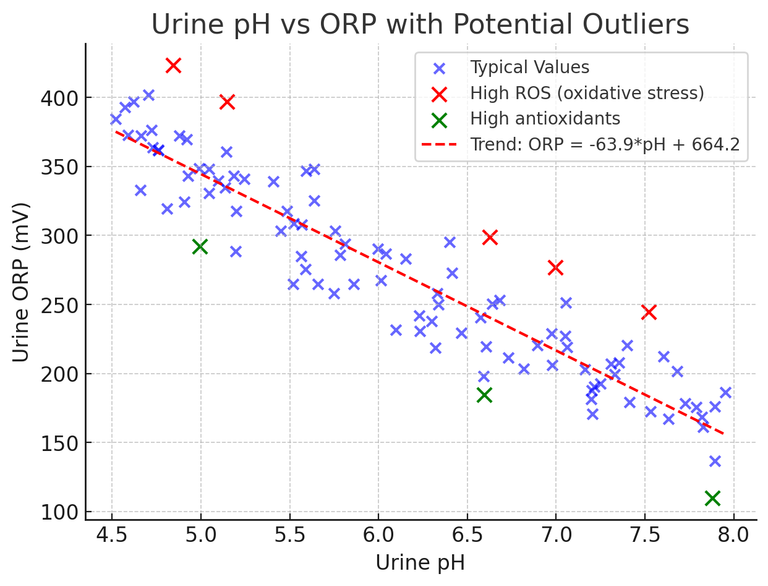
Urine ORP (Oxidation-Reduction Potential) reflects body metabolic changes, hydration, and immune system activity. However, given the technical complexity (need for calibrated platinum/Ag‑AgCl electrodes, cleaning, durability), a dedicated ORP sensor is not yet available currently and no company has announced one.

In real urine studies, pH and ORP shows a moderate negative correlation of ~–64 mV per unit pH. Deviation of urine ORP from the trendline can add unique insights by indicating the presence of high ROS (due to infection or dietary intake) or high antioxidants.
While urine pH, ORP, TDS & Specific Gravity cannot determine cancer directly, the trend of these parameters over time can give indirect indication of cancer development by tracking changes in body health.
| low | normal | high | |
|---|---|---|---|
| pH | < 5.5 | 6.0 - 7.5 | > 7.5 |
| TDS (ppm) | < 500 | 500 - 1500 | > 2000 |
| ORP (mV) | < 0 (not necessarily bad) | 0 - 350 | > 350 |
| Specific Gravity | < 1.010 | 1.010–1.025 | > 1.025 |
| Urine pH | High TDS + High ORP | High TDS + Low ORP | Low TDS + High ORP | Low TDS + Low ORP |
|---|---|---|---|---|
| 🔴 Low (Acidic < 5.5) | Uncontrolled diabetes, cancer with inflammation, metabolic acidosis. Indicates high metabolic waste and oxidative stress — body is struggling to buffer acids. | Cancer, ketosis, fasting, antioxidant overload. Acidic urine with high solute and low redox potential may reflect tumor metabolism or high reducing compound excretion. | Early oxidative stress, dehydration, inflammation. Acidic but low solute suggests early imbalance or catabolic stress. | Fasting, ketogenic diet, antioxidant excess. Low stress load may be healthy or reflect suppressed kidney excretion. |
| 🟢 Normal (6.0–7.5) | Early chronic disease, low-grade infection, oxidative stress. Normal pH may mask internal inflammation or toxin load. | Cancer with reducing environment, detoxing. Reducing compounds balance high solute output; monitor for chronic disease. | Emerging metabolic stress, mild dehydration. Inflammation without solute load suggests early oxidative imbalance. | Healthy or early kidney dysfunction. Could reflect good systemic balance or suppressed excretory function. |
| 🔵 High (>7.5) | UTI with immune response. Alkaline urine from bacteria (e.g., Proteus), and oxidative stress from immune activation. | Post-infection recovery or CKD. Solutes remain high, but oxidative stress may be decreasing; monitor renal recovery. | Autoimmune inflammation, early kidney damage. Low solute with high ORP indicates poor clearance and oxidative burden. | Alkaline diet, overhydration, renal tubular acidosis. Could be benign (diet) or pathological — track with symptoms and SG. |