It's not surprising, in our present culture of digital watches and wall calendars, that we've lost the original astronomical meaning of these Bible stories.
Today most people never look at the stars or pay any attention to the position of the sun in the sky.
The following is the result of intensive investigation into the Bible, its contents, origin, history, and everything that modern day biblical scholars know.
"Traveling In Space With Jesus Christ " Is a series of lessons that will show you the similarities between the story of Jesus Christ's journey, while being compared to the journey that our very own Sun takes through the constellations.
This is a continuation from the first lessons series of 39.
In order for you to understand the entire concept, it is of extreme importance that you read all of this in order starting with lesson one.
Please DO NOT skip ahead. Doing so will just cause you confusion and eventually will end with you in cognitive dissonance.

Introduction
In ancient times people were very familiar with the Sun and the stars. At night they had nothing better to do than gaze up at the stars. They saw how the stars move across the sky during the night, and how different constellations are visible at different times of the year.
They made up stories which were allegories based on what they saw. Later on, these stories took on a life of their own, as the stories were passed down from generation to generation but the knowledge of what the stories represented was lost. People started believing the stories were real and actual history of events that actually really happened in the past, when originally the stories were nothing more than allegories for what people saw happening in the stars.
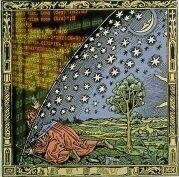
The ancients looked to the sky to determine what time of year it was. It was important to know what time of year it was. You needed to know when it was time to plant crops and when it was time to harvest the crops. As the year passed the Sun appears to make a journey through the constellations of the Zodiac. The entire story of Jesus’ ministry is an allegory for this journey.
Lesson 11: The Constellations Don't Look Like What They're Named
(From South Park Episode 211 "Roger Ebert Should Lay Off The Fatty Foods")
[Inside the planetarium]
Dr. Adams: Good morning children and welcome to the plane-arium. We're going on a fascinating ride through the universe. So I want you to lean back in your chairs and get comfortable.
(The chairs lean back)
Stan: This is stupid.
Dr. Adams: And now I'm going to dim the lights, and let the stars....come out.
Kyle: Whoopee...
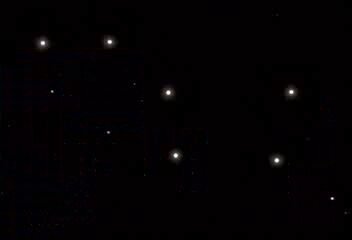
Dr. Adams: Here we see the constellation called the Big Dipper. If I project the drawing of a big dipper on top of it, we see where the constellation gets its name.
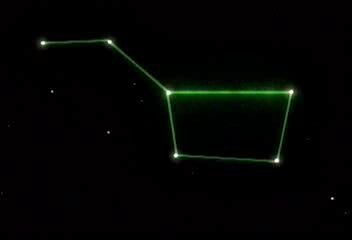
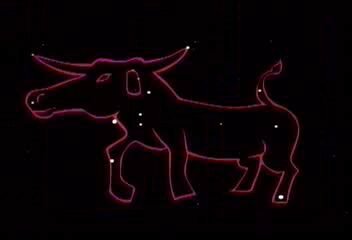
Dr. Adams: These stars over here form the constellation of Taurus, the bull.
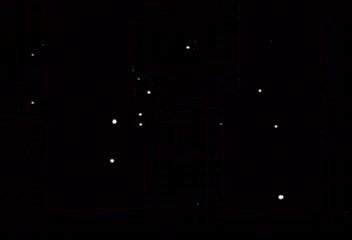
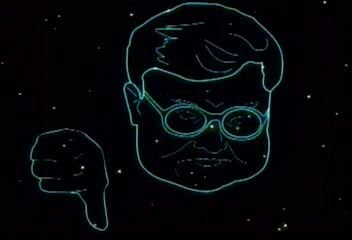
Dr. Adams: While these stars form the constellation Roger Ebert.
Dr.Adams: And these two little stars over here form the constellation, the Crusades.
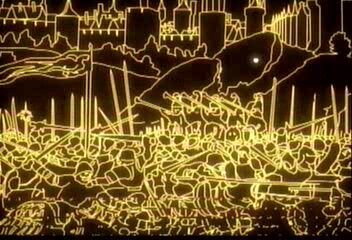
The reason some constellations don't look anything like what they are named is because some constellations have more to do with what time of year it is when they become prominent and what that time of year originally reminded people of. For example, the constellation Aquarius, the Water Bearer, is the constellation that becomes prominent during the rainy season.
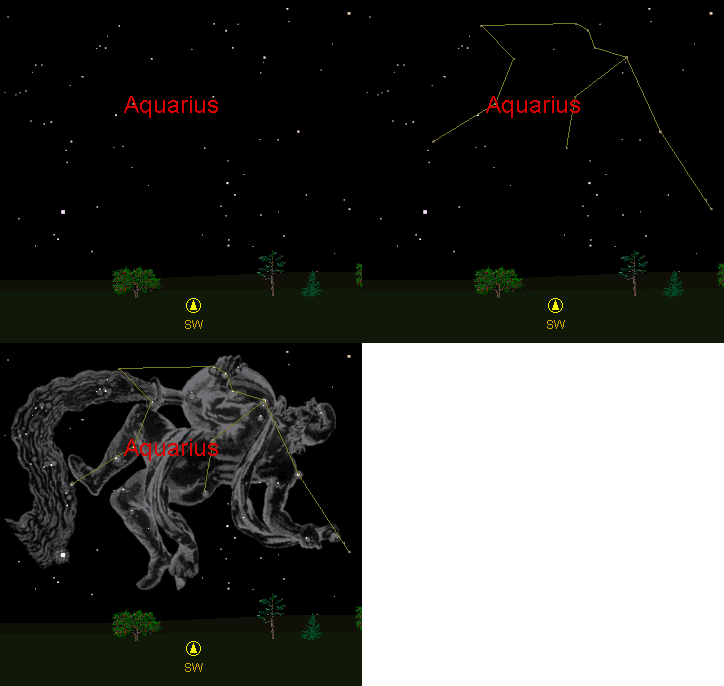
The stars doen't look anything like a guy pouring a pitcher of water. Connecting the stars to try and make an image of a guy pouring a pitcher of water is futile. But every year when those stars are just above the horizon at sunset it always rains because it's that time of year. Hence people began identifying that set of stars with rain, and eventually personified those stars as a guy pouring a pitcher of water.
Lesson 12: Seasons of the Year
Winter Solstice
(Dec. 21 or 22)
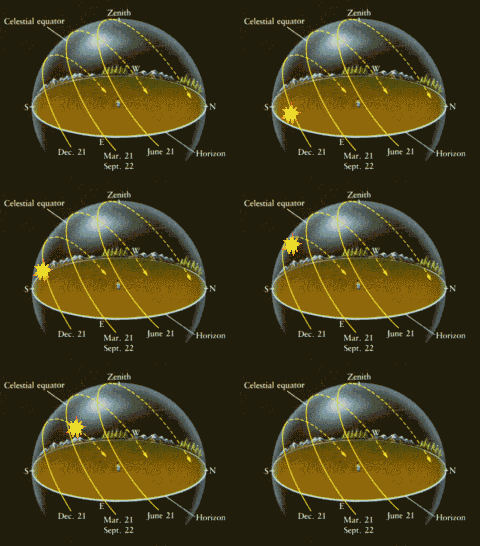
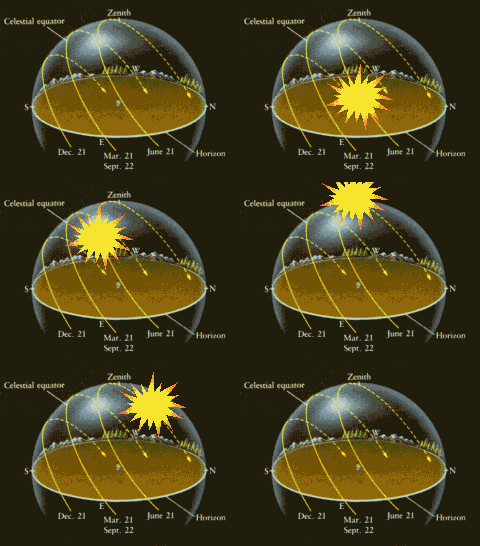
The Sidereal Year begins on the Winter Solstice (December 21 or 22). This is the beginning of Winter. The Winter Solstice is the shortest day of the year. The sun rises south of due east and sets south of due west. The sun is also at a low angle in the sky. Because the days are short and the sun is at a low angle it is cold during Winter. It rains a lot during Winter.
Spring Equinox
(March 21)
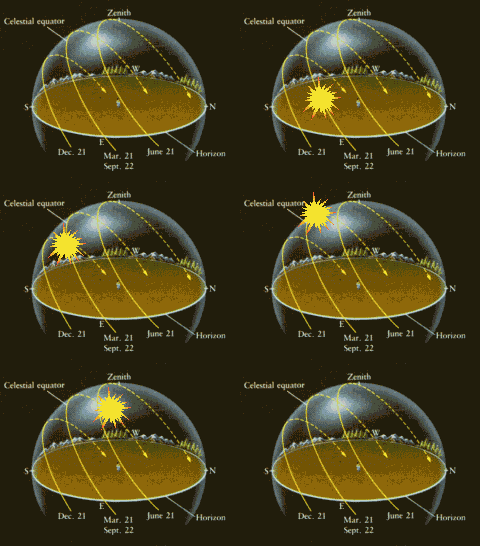
As the year progresses the days get longer and longer. Each day the sun rises and sets slightly farther north than it did the day before. After one quarter of a year we reach the Spring Equinox (March 21) when the sun rises due east (hence the term East-er) and sets due west. Day and night are of equal length. This is the beginning of Spring. The goodness of light and warmth begins to conquer the badness of darkness and cold. Crops begin to grow.
Summer Solstice
(June 21)
As the year progresses further the days continue to get longer. Each day the sun rises farther north of due east than it did the day before, and sets farther north of due west. At mid-year we reach the Summer Solstice (June 21) when the sun rises farthest north of due east and sets farthest north of due west. The Summer Solstice is the longest day of the year. Summer begins on the Summer Solstice. The sun is high in the sky, giving lots of warmth and light. Crops continue to grow.
Autumn Equinox
(Sept. 21)
After the Summer Solstice the days begin to get shorter. Each day the sun rises and sets slightly farther south than it did the day before. Crops grow well during the Summer quarter. Near the end of the Summer quarter is harvest time, the best time of the year. We harvest the crops and crush the grapes to make wine. The sun has done it's job providing us with life-giving food and wine.
Three-quarters through the year we reach the Autumn Equinox (Sept. 22) when the sun again rises due east and sets due west. Day and night are again of equal length. This is the beginning of Autumn. The goodness of light and warmth begins to fail us. The badness of darkness begins to overcome the goodness of light.
Winter Solstice
(Dec. 21 or 22)
During Autumn, the last quarter of the year, the sun dies. The days get shorter and shorter, and it gets colder and colder. Each day the sun rises and sets further south. Will the sun disappear forever? What will happen to us? Have no fear, have faith. Yes the sun will die, but the sun will soon be reborn. A new year will soon begin. This is the end of our story, and it is also the beginning.
What happens after this? Go to the top of the page and read the story again.
The story is circular—a new year begins immediately after the old year ends. A new year is born immediately after the old year dies.
All credit goes to my personal friends who allowed me to use their site to present this, for the mere sake of spreading knowledge.
Read it all here at
Imagine A World Without Superstitions
The Most Dangerous Superstition by Larken Rose (Free PDF download):
Learn To Win In Traffic Court in 30 Days!!!
Don't forget to comment with any questions or concerns you may have.
Grammar Nazis are welcome here. Help me help you.
This post recieved an upvote from minnowpond. If you would like to recieve upvotes from minnowpond on all your posts, simply FOLLOW @minnowpond