
Hi everybody :)
In one of the previous posts, more specifically the one titled: "LL" Lunar Landscape, I ended the short introduction by describing how the details of this piece resembled a lunar landscape, and today I continue the presentation of the visual record that was made, this being the second article and thus leaving a third to be presented, where I will finish the cycle of records, which I needed to extend to a total of 3 articles to be able to record the entire area, since this piece is a little "much" larger than those I usually present here.
The "landscape" will not vary much from the previous one nor from the one that will be presented to finish, but it is always interesting, because when observed in detail, the difference and the distinct personality of each area chosen for the presentation is noticeable.
Session Purpose
The goal of these macro photography sessions is to capture images with as much detail as possible within the capabilities of the technique used, always focusing on the meticulous observation and documentation of all visual characteristics and details. Furthermore, I aim to create attractive visual compositions for publication on this blog, seeking to share the beauty and complexity of this work.
Let me present today’s model:



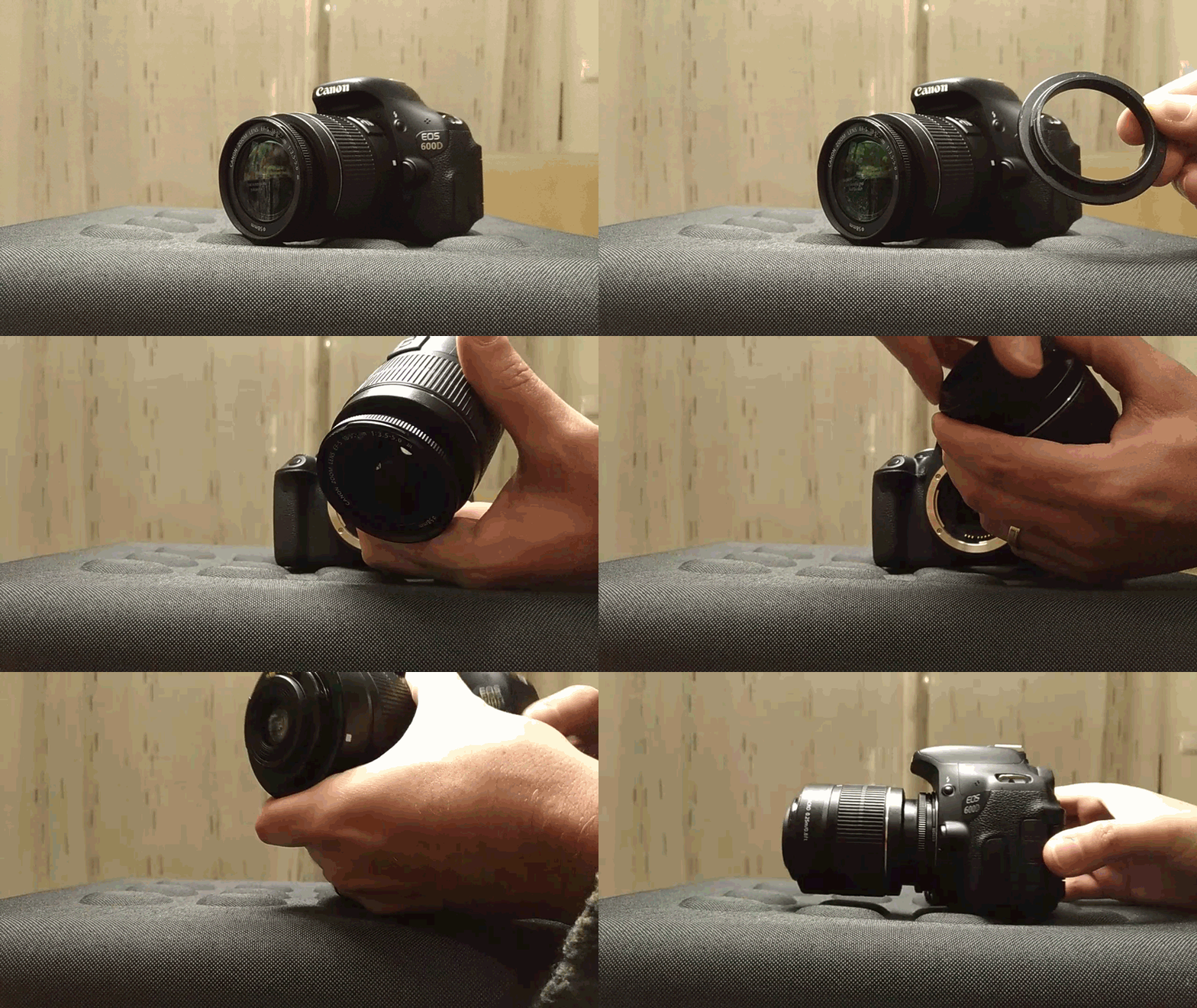
Among the numerous techniques available for macro photography, this method is arguably the most cost-effective and efficient for individuals possessing a camera with a removable lens. By simply detaching the lens and reversing its direction, and employing an inversion ring, the process becomes more manageable and streamlined.
Used equipments
Camera: Canon EOS 600D Digital SLR with CMOS sensor
Lens: EFS 18-55mm with f/5 maximum aperture, allowing shallow depth of field and capturing fine details.
Used inverter ring
Tripod: not used
Lighting: Adjustable LED lights to provide soft, even lighting, avoiding harsh shadows and highlighting the details of structures.
Camera Settings
Focus Mode: Manual focus to ensure precision in specific details of the structure.
Aperture: Variable aperture between f/4 and f/5 for adequate depth of field, ensuring all important details are in focus.
ISO: Low ISO setting (800) to minimize noise in images.
Shutter Speed: Adjust shutter speed as needed to avoid underexposure, while maintaining a value that allows you to capture sharp details.
To finish, i leave you with some considerations regarding these photo sessions:
Observing all these pieces through macro photography reveals a fascinating dimension and breadth, full of minute details that ultimately assume significant importance in the visual composition. The complexity of these objects, when viewed from this perspective, takes on a beauty that is often overlooked by the indifference of the eye. The essence of macro photography lies in its ability to elevate ordinary objects to extraordinary levels, offering an intimate and captivating perspective.
The session is closed for today.
Hope you like it :)
These photos weren't taken with a tripod
Camera - Canon EOS 600D
Lens - EFS 18-55mm
Location - Portugal

See you soon
Thank you for watching
Never forget
The price of anything is the amount of life you trade for it.
Time is life... value yours, make every fraction worth it.
Congratulations @aleister! You have completed the following achievement on the Hive blockchain And have been rewarded with New badge(s)
Your next target is to reach 220000 upvotes.
You can view your badges on your board and compare yourself to others in the Ranking
If you no longer want to receive notifications, reply to this comment with the word
STOPCheck out our last posts: