NodeOps is a DePIN (Decentralized Physical Infrastructure Network) project focused on building a chain-agnostic, AI-powered orchestration layer for decentralized compute and blockchain node management.
In recent weeks, thanks to revenue and the project's unique dynamic mint and burn model (tying token emissions to onchain revenue), the NODE token (that powers the NodeOps ecosystem) has entered into deflationary territory.
In this article, we will discuss the project's core features, tokenomics, and its recent weekly economic metrics.
NodeOps Core Features
NodeOps is composed of several key products:
No-code tools, such as the NodeOps Console, allow users (customers) to easily deploy, monitor, and manage blockchain validators, nodes, and services. These resources can be paid for with debit/credit card, stablecoins, and other cryptocurrencies.
Permissionless marketplace (NodeOps Cloud) for verifiable general-purpose compute, where providers supply resources (such as CPU/GPU) and earn rewards (in NODE tokens) based on performance and uptime.
Additional products include:
- Staking Hub - Stake NODE and other supported tokens to earn a portion of the platform's revenue
- Security Hub - AI-powered vulnerability scanning to verify the integrity of codebases and public docker images
- Agent Terminal - AI developer sandbox allows users to connect their AI agents directly to the compute resources they need
Although NodeOps started as a Node-as-a-Service (NaaS) platform, it has since evolved into a broader DePIN coordination protocol, supporting over 100 blockchains/protocols, and deploying tens of thousands of nodes.
Tokenomics
The long-term viability of a cryptocurrency project could be impacted by its initial token allocation. In the case of NodeOps, 47.5% was allocated to the community, 15% for protocol incentives, 22.5% to early investors, and 15% to initial contributors.

Tokens allocated to investors and early contributors are unlocked over a period several years. For more details, see the online documentation.
Mint And Burn Model
The NODE token powers the ecosystem with a dynamic mint-and-burn model tied directly to on-chain revenue. 50% of fees are used to buy and burn tokens, often resulting in net deflationary supply.
In fact, recent weekly burns exceeded mints, verifiable on their transparency dashboard. This adjusts circulating token supply based on real usage, rather than fixed emissions (like Bitcoin).
We briefly covered the tokenomics of NodeOps in a previous article about Bitcoin vs DePIN tokenomics.
Deflationary Token Supply
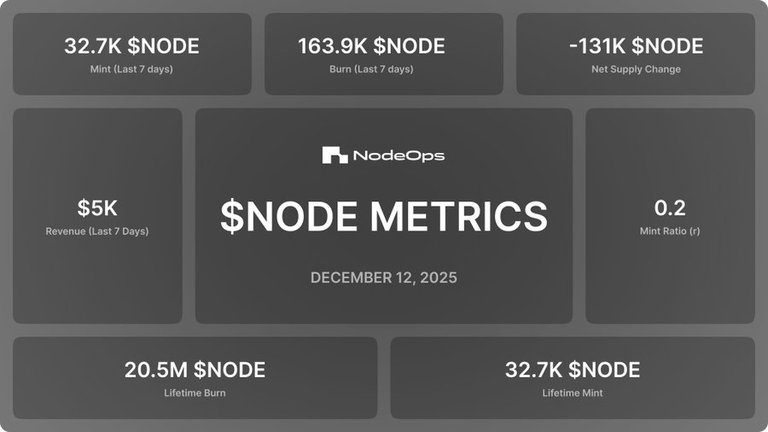
On December 12th, NodeOps posted the latest weekly NODE economic metrics:
- 7 Day Revenue: $5,052.00
- 7 Day Mint: 32,771.78 NODE
- 7 Day Burn: 163,858.92 NODE
- Net supply change: -131,087.14 NODE
- Mint ratio: 0.2
In other words, NODE is currently in deflationary territory, and unlike the traditional banking system, anyone can verify the changes to the token supply via a public block explorer or from their own Ethereum node.
By the way, you can also track NodeOps $USD revenue on their Dune dashboard.
NODE Token
The NODE token was minted on Ethereum, but has since been bridged to both Binance Smart Chain, and Layer 2 Arbitrum. The token can be traded on decentralized exchanges such as Pancakeswap and Uniswap.
Until next time...
Considering their revenue, deflationary tokenomics, and the promising future of DePIN, the NodeOps project may be worth keeping an eye on. That said, this project is still in its experimental stage, so be sure to do your own research before investing.
If you learned something new from this article, be sure to check out my other posts on crypto and finance here on the Hive blockchain. You can also follow me on InLeo for more frequent updates.
Further Reading
- Are Decentralized Blockchains The Solution To Flawed Economic Data?
- Why Fair Token Distribution Is Crucial To Effective Blockchain Governance
- More DePIN Projects
Posted Using INLEO