If there is one place that no one should miss while visiting the Galapagos Islands, it is the Charles Darwin Research Station. As we tour its facilities, we can understand the importance of this natural treasure to the world.
Si hay un lugar que nadie debería perderse al visitar las Islas Galápagos, ese es la Estación Científica Charles Darwin. Al recorrer sus instalaciones, podemos comprender la importancia que tiene este tesoro natural para el mundo.

As soon as I arrived on Santa Cruz Island, and after leaving my things at the hotel, my first goal was to visit this iconic place. I walked through downtown Puerto Ayora, along Charles Darwin Avenue, had my first encounters with the local wildlife, which I showed in my previous post, passed by a beach, and arrived there. Admission is free.
Tan pronto como llegué a la isla Santa Cruz, y después de dejar mis cosas en el hotel, mi primer objetivo fue visitar este lugar emblemático. Caminé por el centro de Puerto Ayora, a lo largo de la avenida Charles Darwin, tuve mis primeros encuentros con la fauna local, que mostré en mi publicación anterior, pasé por una playa y llegué allí. La entrada es gratuita.


My excitement was supreme, I was about to see several animals live and in person for the first time. Without a doubt, the most impressive are the giant tortoises of the Galapagos. I went in, and as I followed the paths, there they were, completely relaxed in their spaces.
Mi emoción era suprema, estaba a punto de ver por primera vez en vivo y directo, a varios animales. Sin duda, los más impresionantes son las tortugas gigantes de las Galápagos. Entré, y al seguir por las caminerías, aparecieron ellas, completamente relajadas en sus espacios.


Seeing them up close was like witnessing a chapter of prehistory. Their slow movements, their enormous shells, their tough skin... There are about 13 species of giant tortoises on these islands, and unfortunately, they are all endangered. Breeding programs for reintroduction are one of the tasks of this Scientific Station.
Verlas tan de cerca fue como estar presenciando un capítulo de la prehistoria. Sus movimientos lentos, sus enormes caparazones, esa piel tan resistente... En estas islas existen unas 13 especies de tortugas gigantes, y por desgracia, todas están en peligro de extinción. Los programas de cría para la reintroducción son una de las tareas de esta Estación Científica.

These tortoises can weigh up to 400 kg and measure around 2 meters, making them the largest species of land tortoise in existence today. They can also live for more than 150 years, making them one of the longest-living animals known to man. Before the arrival of humans, they lived on almost all the islands in the archipelago, but over two centuries they were hunted for their meat and their population declined dramatically. It is very sad that our species is almost always responsible for the disappearance of others.
Estas tortugas pueden llegar a pesar 400 kg y medir unos 2 metros, lo que las hace ser la especie de tortuga terrestre más grande que existe hoy en día. Además pueden vivir más de 150 años, siendo uno de los animales más longevos que se conocen. Antes de la llegada del ser humano, vivían en casi todas las islas del archipiélago, pero durante dos siglos fueron cazadas por su carne y su población se redujo drásticamente. Es muy triste que nuestra especie casi siempre sea la responsable de que otras desaparezcan.

Later on, I encountered the Galapagos land iguana, which is also endemic to these islands, meaning that it only exists here.
Más adelante, conocí a la iguana terrestre de Galápagos, también endémica de estas islas, es decir, que sólo existe aquí.
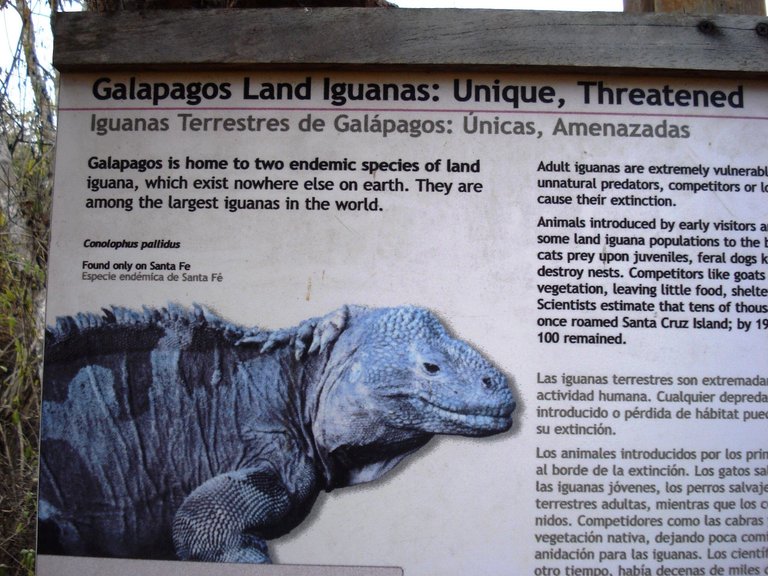
These striking yellowish reptiles are one of three species of land iguanas that live here.
Estos llamativos reptiles amarillentos son una de las tres especies de iguanas terrestres que viven aquí.

Unfortunately, they have also been under threat for many years. Animals introduced to the islands, such as dogs, cats, pigs, among others, have caused their populations to decline and even disappear in many areas. However, conservation programs at the Charles Darwin Research Station have succeeded in reintroducing this species and increasing its population.
Lamentablemente, desde hace muchos años también están amenazadas. Animales introducidos en las islas, como perros, gatos, cerdos, entre otros, han hechos que sus poblaciones hayan disminuido e incluso desaparecido en muchas zonas. Sin embargo, los programas de conservación de la Estación Científica Charles Darwin, han logrado reintroducir esta especie y aumentar su población.


The fauna that exists in the Galapagos Islands is what makes this place so special. The number of endemic species is very large, for example, 80% of land birds, 26% of seabirds, 82% of mammals, and 95% of reptiles.
La fauna que existe en las Islas Galápagos es lo que hace que este lugar sea tan especial. El número de especies endémicas es muy grande, por ejemplo, el 80% de las aves terrestres, el 26% de las aves marinas, el 82% de los mamíferos y el 95% de los reptiles.

Returning to my tour and the most emblematic animal of these islands, the giant tortoises, here we can see different specimens. For example, those with a domed shell and short neck, and those with a long neck and flatter shell.
Volviendo a mi recorrido y al animal más emblemático de estas islas, las tortugas gigantes, aquí podemos ver diferentes ejemplares. Por ejemplo, las que tienen el caparazón abombado y el cuello corto, y las que tienen el cuello largo y el caparazón más plano.


When British naturalist Charles Darwin visited the islands in 1835, he noticed that turtles with short necks and domed shells inhabited the mountainous, green islands, while those with long necks and flatter shells lived on the flat, dry islands, where they had to work harder to find food. These different anatomical characteristics depending on the island were key to the scientist's famous theory of evolution.
Cuando el naturalista británico Charles Darwin visitó las islas en 1835, se dio cuenta de que las tortugas con cuellos cortos y caparazones abombados habitaban las islas montañosas y con vegetación, mientras que las de cuello largo y caparazón más plano vivían en las islas llanas y secas, donde tenían que esforzarse más para encontrar alimento. Estas diferentes características anatómicas según la isla fueron clave para la famosa teoría de la evolución del científico.


Look at the shells of the turtles below; they have a different shape from the first ones I showed you.
Miren los caparazones de las tortugas a continuación, tienen una forma diferente a las primeras que les mostré.


Other animals that can be seen at the Scientific Station and anywhere on the islands are Darwin's finches, very sociable little birds. If you are eating something, they will land on your hand without any fear 😄.
Otros animales que se pueden ver en la Estación Científica y en cualquier lugar de las islas son los pinzones de Darwin, unos pajaritos muy sociables. Si estás comiendo algo, se posarán en tu mano sin ningún miedo 😄.

The flora also plays a leading role here. There is a section called Native Gardens, and also the Shade House, where you can see many plants from the Galapagos Islands.
La flora también es protagonista aquí. Hay una parte llamada Jardines Nativos, y también la Casa de Sombra, donde se pueden ver muchas plantas de las Islas Galápagos.


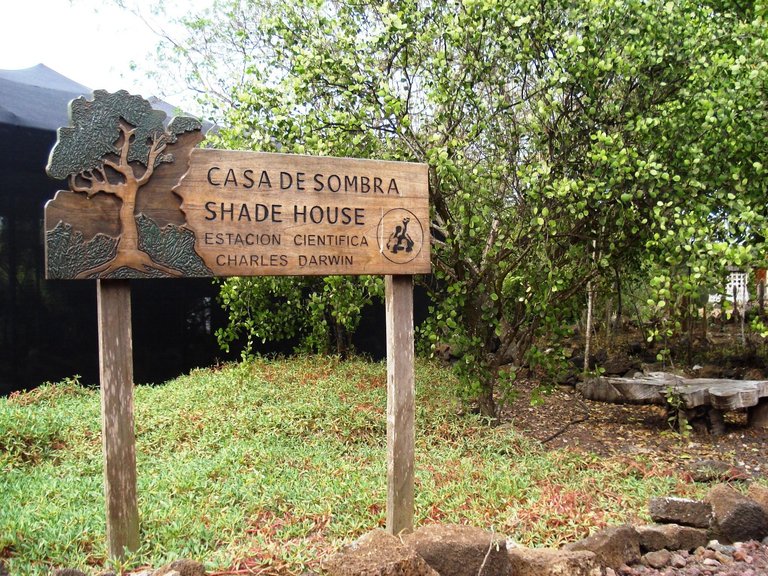
More than 30% of the plants that exist in this archipelago are endemic.
Más del 30% de las plantas que existen en este archipiélago son endémicas.


At the end of my visit to this important conservation, research, and education center, which plays a key role in protecting the ecosystem of these islands, I met another animal that is popular around here: the marine iguana.
Al final de mi visita a este importante centro de conservación, investigación y educación, que desempeña un papel clave en la protección del ecosistema de estas islas, conocí a otro animal muy popular por aquí: la iguana marina.
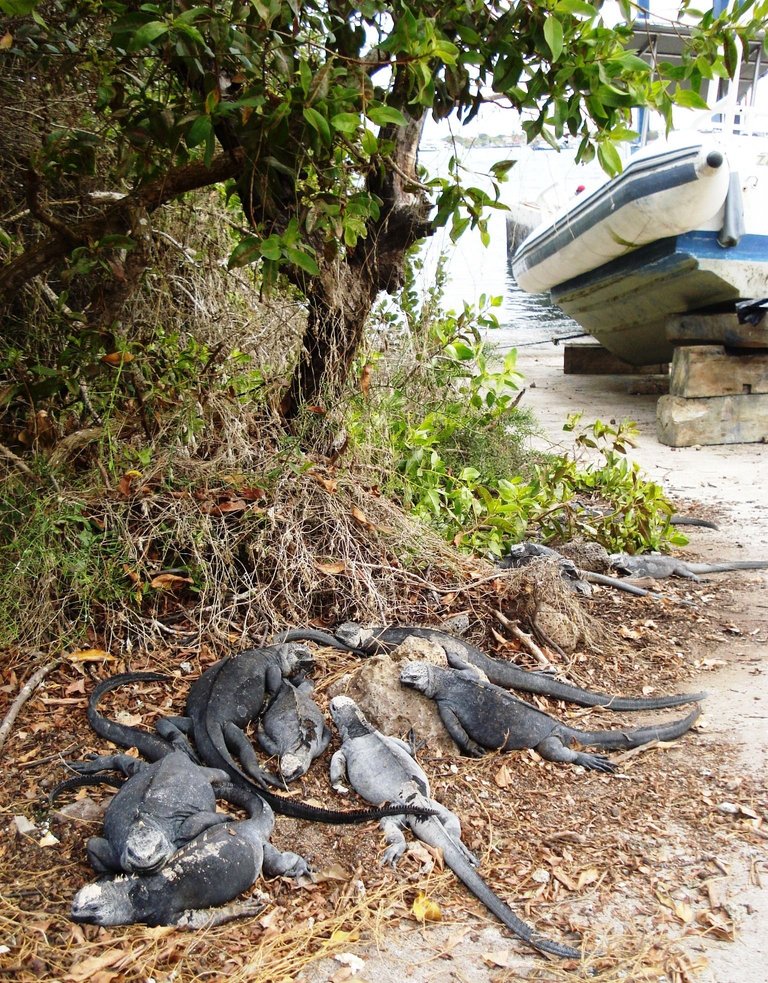
I simply passed by the coast and there they were, resting. I guess they had a busy day. They are also endemic and the only marine lizard in the world.
Simplemente pasé cerca de la costa y allí estaban, descansando. Supongo que tuvieron un día agitado. También son endémicas y el único lagarto marino que existe en el mundo.
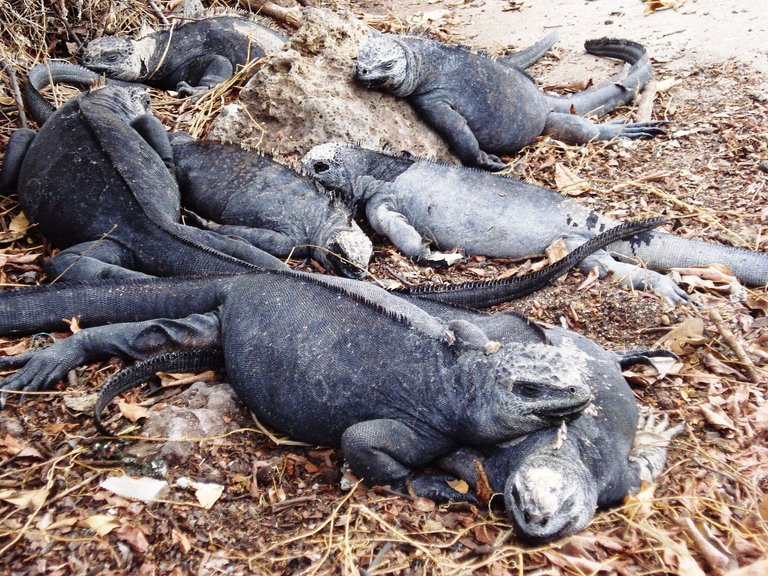
Beautiful! And you can see them in any coastal area. When they dive into the sea, it's quite a sight.
¡Hermosas! Y se pueden ver en cualquier zona costera. Cuando se zambullen en el mar es todo un espectáculo.

That's it for this visit. I hope you found it as interesting as I did, and if you want to read the previous chapters of this travel diary, here are the links. See you next time!
Hasta aquí esta visita. Espero que les haya resultado tan interesante como a mí, y si quieren leer los capítulos anteriores de este diario de viaje, les dejo los enlaces. ¡Hasta la próxima!
All photos are my property and were taken with a Sony Cyber Shot digital camera / Todas las fotos son de mi propiedad y fueron tomadas con una cámara digital Sony Cyber Shot
This post has been shared on Reddit by @dayadam through the HivePosh initiative.
Thank you! 😊
Hiya, @glecerioberto here, just swinging by to let you know that this post made it into our Top 3 in Travel Digest #2769.
Your post has been manually curated by the @worldmappin team. If you like what we're doing, please drop by to check out all the rest of today's great posts and consider supporting other authors like yourself and us so we can keep the project going!
Become part of our travel community:
😃 Thank you so much @glecerioberto and @worldmappin! 😊
You are very welcome @sofathana! it was well deserved. ☀️
We are already looking forward to reading more about your adventures!
😊❤️
Maravillaaaa .
¡Totaaaaaal! 😃
Top class article @sofathana friend!
!discovery
!PIZZA
Thank you so much @jlinaresp friend! 😊
This post was shared and voted inside the discord by the curators team of discovery-it
Join our Community and follow our Curation Trail
Discovery-it is also a Witness, vote for us here
Delegate to us for passive income. Check our 80% fee-back Program
Thanks for your support! 🙂
Indeed, the shells of the turtles are different, thank you for pointing that out, now I see it as well.
Some years ago I have seen some huge turtles in the Oceanographic in Valencia, but then I didn't pay attention if there were different types of shells.
Oh, this cactus has the shape of a heart <3
It's not easy to tell, because if you look at them head-on, you can't really see much difference in their shells.
Yeah, that cactus was giving everyone there some prickly love, haha 😁.
You can check out this post and your own profile on the map. Be part of the Worldmappin Community and join our Discord Channel to get in touch with other travelers, ask questions or just be updated on our latest features.