
To be honest, I was very interested in history at school, it was one of my favorite subjects. But Egyptian history somehow slipped past my eyes. I was most interested in the Middle Ages, all those wild wars over kingdoms. I read a lot of books on the Middle Ages, but I discovered the first book about Egypt as an adult. Once we had a yacht cruise with friends off the coast of Italy in the Mediterranean Sea. The yacht was rented, but unexpectedly in a drawer in the cabin I found a shabby book in English about the Egyptian pharaohs. Now I don't even remember its name, but in my free time I would open it while sunbathing on the deck. At first, it was just to pass the time, but it captivated me so much that I finished it in a couple of days. Since then, I have become interested in Egyptian history and everything related to this country. And in order to get to know the real Egypt, you must visit Luxor. It was here that the magnificent capital of the ancient Egyptian state, Thebes, once stood. My review today will be about this excursion. And about our first stop - Karnak Temple.
Jei atvirai, mokykloje labai domėjausi istorija, tai buvo vienas mėgstamiausių mano dalykų. Tačiau Egipto istorija kažkaip praslydo pro akis. Labiausiai domėjausi viduramžiais, visais tais pašėlusiais karais dėl karalysčių. Skaičiau daug knygų apie viduramžius, bet pirmąją knygą apie Egiptą atradau jau suaugusi. Kartą su draugais plaukiojome jachta prie Italijos krantų Viduržemio jūroje. Jachta buvo išnuomota, bet netikėtai kajutės stalčiuje radau apšiurusią knygą anglų kalba apie Egipto faraonus. Dabar net nepamenu jos pavadinimo, bet laisvalaikiu ją atsiversdavau, degindamasi saulėje ant denio. Iš pradžių tai buvo tik laiko praleidimui, bet ji mane taip sužavėjo, kad užbaigiau per porą dienų. Nuo tada pradėjau domėtis Egipto istorija ir viskuo, kas susiję su šia šalimi. O norint pažinti tikrąjį Egiptą, būtinai reikia aplankyti Luksorą. Būtent čia kadaise stovėjo didinga senovės Egipto valstybės sostinė Tėbai. Šiandien mano apžvalga bus apie šią ekskursiją. Ir apie mūsų pirmąją stotelę – Karnako šventyklą.>
The excursion was offered to us by our tour operator during our vacation in Hurghada. Although the trip is one of the more expensive, we agreed to participate because I am very interested in the history of Ancient Egypt, and secondly, nowhere else in Egypt has so much evidence of its former splendor been collected as in Luxor. During the full-day tour, we visited the following places of Ancient Egypt: Karnak Temple, Colossi of Memnon, Valley of the Kings, and the Temple of Queen Hatshepsut. We also sailed on a boat along the sacred Nile and visited an alabaster factory. The program was very rich and interesting. We left at three o'clock in the morning, we arrived at ten o'clock in the evening. Tired, sleepless, but full of excitement.
Ekskursiją mums pasiūlė mūsų kelionių organizatorius atostogų Hurgadoje metu. Nors kelionė yra viena brangesnių, sutikome dalyvauti, nes labai domiuosi Senovės Egipto istorija, ir, antra, niekur kitur Egipte nėra surinkta tiek daug buvusio jo spindesio įrodymų, kiek Luksore. Visos dienos turo metu aplankėme šias Senovės Egipto vietas: Karnako šventyklą, Memnono kolosus, Karalių slėnį ir karalienės Hačepsutos šventyklą. Taip pat plaukėme laivu šventuoju Nilu ir aplankėme alebastro fabriką. Programa buvo labai turininga ir įdomi. Išvykome trečią valandą nakties, grįžome dešimtą valandą vakaro. Pavargę, bemiegiai, bet kupini įspūdžių.>
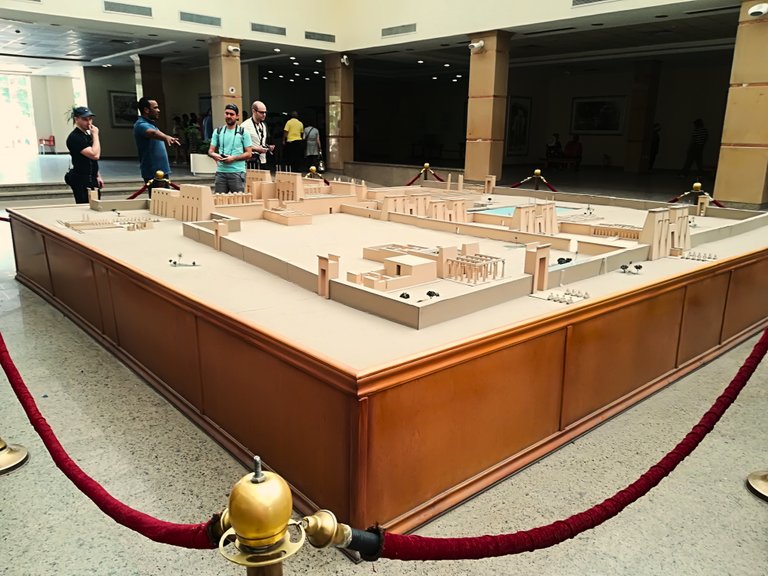
Luxor is located on the right bank of the Nile. Currently, it is the largest open-air museum in the world. It houses one-third of all ancient monuments. The Nile divides the city into two parts. One part on the western side is named the city of the dead. Another part on the eastern bank - the city of the living. Our tour begins in the city of the living, home to two grand temples - Karnak and Luxor. The other part of the city, the western one, houses the Colossi of Memnon, the Valley of the Kings and Queens, and a few temples: the famous Temple of Hatshepsut, the temples of the pharaohs Ramses II and Ramses III, and some tombs of the nobility.
Luksoras yra dešiniajame Nilo krante. Šiuo metu tai didžiausias muziejus po atviru dangumi pasaulyje. Jame saugoma trečdalis visų senovės paminklų. Nilas miestą dalija į dvi dalis. Viena dalis vakarinėje pusėje vadinama mirusiųjų miestu. Kita dalis rytinėje pusėje – gyvųjų miestu. Mūsų kelionė prasideda gyvųjų mieste, kuriame yra dvi didingos šventyklos – Karnakas ir Luksoras. Kitoje miesto dalyje, vakarinėje, yra Memnono kolosai, Karalių ir Karalienių slėnis ir kelios šventyklos: garsioji Hačepsutos šventykla, faraonų Ramzio II ir Ramzio III šventyklos bei kai kurie didikų kapai.>
We stopped once near a small mosque. Those who wanted could use the restroom or just stretch their legs. At this place we were greeted by local Bedouins who offered tourists the opportunity to take pictures next to their animals: camels or lambs, or standing donkeys. But it was not for free.
Važiuodami, kartą sustojome netoli nedidelės mečetės. Norintys galėjo pasinaudoti tualetu arba tiesiog ištiesti kojas. Šioje vietoje mus pasitiko vietiniai beduinai, kurie pasiūlė turistams galimybę nusifotografuoti šalia savo gyvūnų: kupranugarių ar ėriukų, arba stovinčių asilų. Tačiau tai nebuvo nemokama.>

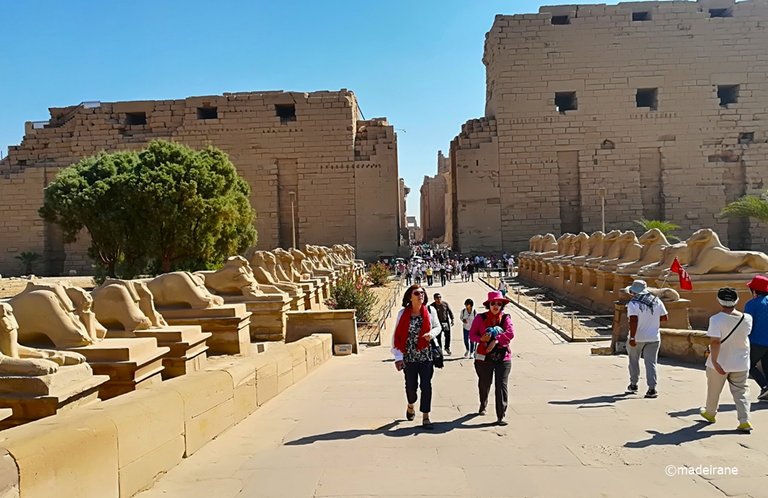
And suddenly we arrived safely at the first stop of our excursion – the Karnak Temple. After getting off the air-conditioned bus, we immediately found ourselves in the scorching sun. I highly recommend that everyone wears hats on excursions! In ancient times, the Karnak Temple, where we arrived, and the Luxor Temple, located 3 km away, were connected by a ram avenue, along which solemn religious processions would pass. Our excursion included only the Karnak Temple, where our guide took us.
Ir staiga saugiai atvykome į pirmąją savo ekskursijos stotelę – Karnako šventyklą. Išlipę iš oro kondicionieriumi aprūpinto autobuso, iškart atsidūrėme kaitrioje saulėje. Labai rekomenduoju visiems ekskursijų metu dėvėti kepures! Senovėje Karnako šventykla, į kurią atvykome, ir Luksoro šventykla, esanti už 3 km, buvo sujungtos avinų alėja, kuria eidavo iškilmingos religinės procesijos. Mūsų ekskursija apėmė tik Karnako šventyklą, į kurią mus nuvedė gidas.>
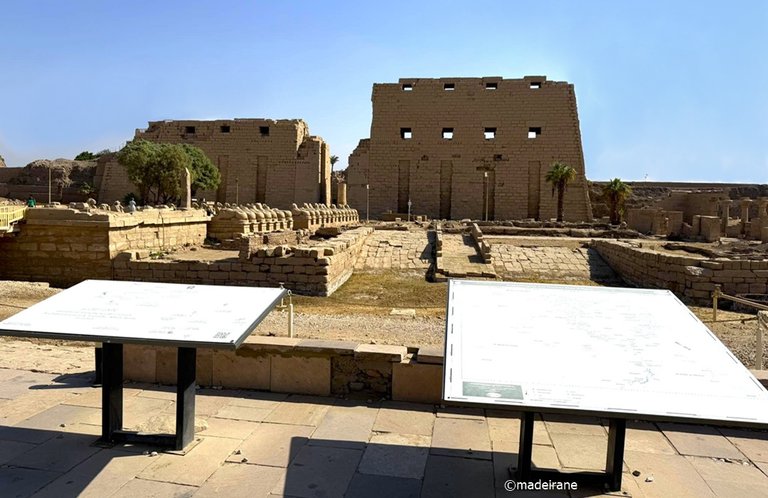
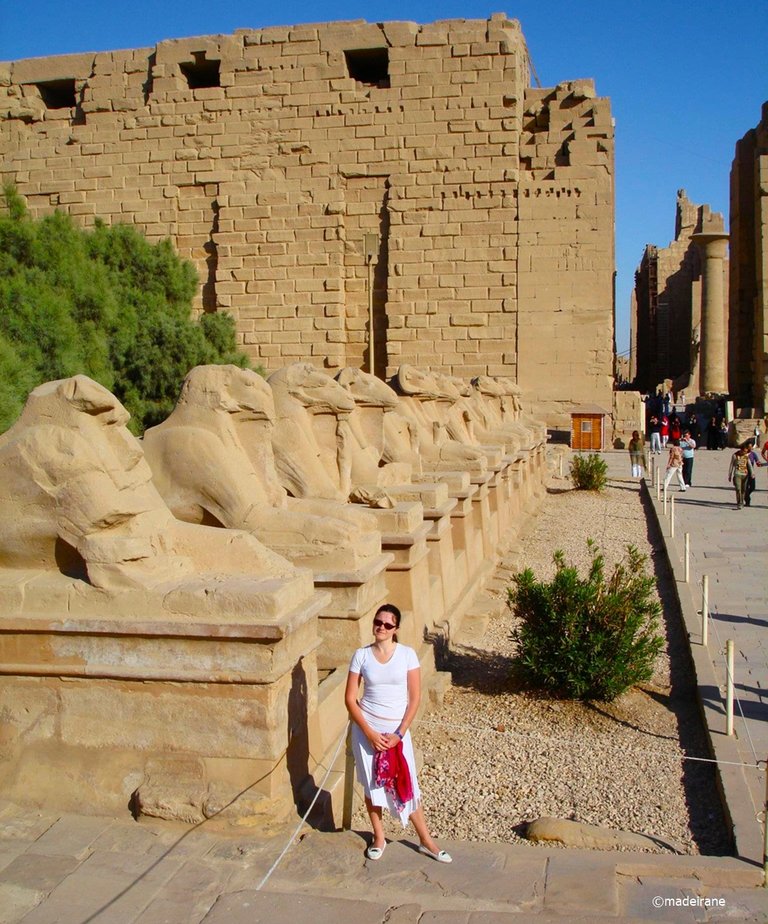
Here it is, the small avenue of rams, or rather, ram-headed sphinxes, leading to the First Pylon of the Karnak Temple. After all, the ram is one of the incarnations of the god Amun, to whom the Karnak Temple is dedicated. Look at how many tourists there are! Because they all arrive at once on a whole caravan of buses.
Štai ji – maža avinų, tiksliau, avingalvių sfinksų alėja, vedanti į Karnako šventyklos pirmąjį piloną. Juk avinas yra vienas iš dievo Amuno, kuriam skirta Karnako šventykla, įsikūnijimų. Pažiūrėkite, kiek daug turistų! Nes jie visi atvyksta vienu metu visu autobusų karavanu.>
Since I knew the history of the Egyptian pharaohs quite well, I didn't want to listen to a guide who spoke in a difficult-to-understand accent. I wanted to take a slow walk among the columns, touch the drawings preserved by time, touch history in the true sense of the word. And if only it were possible, I would like to descend into that time, at least for a short time, when life was brewing here, to become a part of it all. Now I could only take pictures, hug the columns, preserved over the centuries, and marvel at their grandeur. My heart always flutters in such places. Because this is real, this is a story not written, told, but real, unique, maybe the buildings are a little damaged, but authentic. Of course, after restoring all that beauty, the Temple of Karnak would look stunning, but that authenticity would be gone. On the one hand, I would like to see the beauty it had in the days before the vandals' fingers destroyed it or broke it, but that would be modern and hardly authentic.
Kadangi neblogai žinojau Egipto faraonų istoriją, nenorėjau klausytis sunkiai suprantamu akcentu kalbančio gido. Norėjau lėtai pasivaikščioti tarp kolonų, paliesti laiko išsaugotus piešinius, prisiliesti prie istorijos tikrąja to žodžio prasme. Ir jei tik būtų įmanoma, norėčiau bent trumpam nusileisti į tą laiką, kai čia virė gyvenimas, tapti viso to dalimi. Dabar galėčiau tik fotografuoti, apkabinti per amžius išsaugotas kolonas ir stebėtis jų didybe. Tokiose vietose visada virpa mano širdis. Nes tai tikra, tai istorija, neparašyta, nepapasakota, o tikra, unikali, galbūt pastatai šiek tiek apgadinti, bet autentiški. Žinoma, atkūrus visą tą grožį, Karnako šventykla atrodytų stulbinamai, bet to autentiškumo nebeliktų. Viena vertus, norėčiau pamatyti tą grožį, kokį ji turėjo tais laikais, kai vandalų pirštai jos nesunaikino ar nesudaužė, bet tai būtų modernu ir vargu ar autentiška.>

Come closer and take a closer look at these sculptures, which are several thousand years old! It's hard to even imagine such a vast period of time! Moreover, most of the statues are in very good condition. This is because the ancient temple was buried under dry sand and was discovered relatively recently – in the mid-19th century. Within the temple complex, I would especially highlight the Temple of Ramses III – I was very impressed by the rows of enormous statues of the pharaoh!
Priartėkite ir atidžiau apžiūrėkite šias skulptūras, kurioms keli tūkstančiai metų! Sunku net įsivaizduoti tokį ilgą laikotarpį! Be to, dauguma statulų yra labai geros būklės. Taip yra todėl, kad senovės šventykla buvo palaidota po sausu smėliu ir buvo atrasta palyginti neseniai – XIX a. viduryje. Šventyklų komplekse ypač norėčiau pabrėžti Ramzio III šventyklą – mane labai sužavėjo didžiulių faraono statulų eilės!>

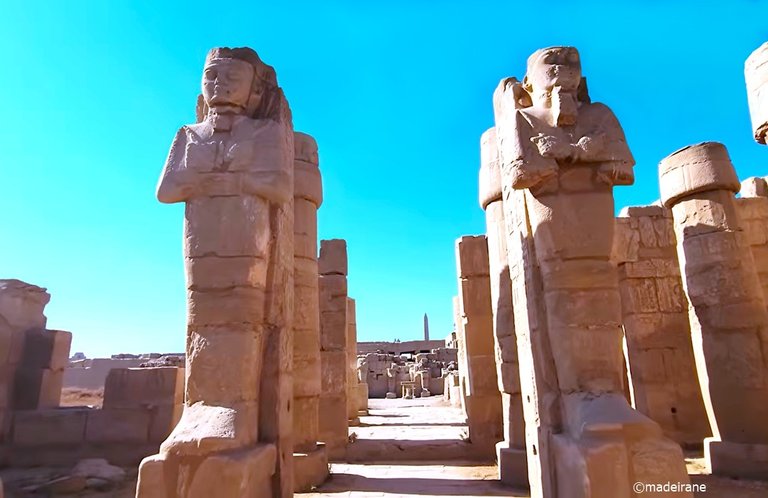
A statue of Ramesses II himself stands at the entrance to the temple. Note that the statue's arms are folded across its chest. This indicates that the pharaoh was dead when it was made. Below, on the statue of his beloved wife, Nefertari (not to be confused with Nefertiti), the arms are free. This indicates that she was alive when the statue was made. Another difference: Ramesses' legs are together, meaning he's not walking, while Nefertari's right leg is slightly forward, as if she were walking. Pharaoh Ramesses II was a strong man, the father of one hundred and eleven boys and fifty girls. The great pharaoh reigned for 66 years.
Prie įėjimo į šventyklą stovi paties Ramzio II statula. Atkreipkite dėmesį, kad statulos rankos sulenktos ant krūtinės. Tai rodo, kad faraonas buvo miręs, kai ji buvo pastatyta. Žemiau, ant jo mylimos žmonos Nefertarės (nereikia painioti su Nefertite) statulos, rankos yra laisvos. Tai rodo, kad ji buvo gyva, kai statula buvo pastatyta. Kitas skirtumas: Ramzio kojos yra suglaustos, tai reiškia, kad jis nevaikšto, o Nefertarės dešinė koja yra šiek tiek pakreipta į priekį, tarsi ji eitų. Faraonas Ramzis II buvo stiprus vyras, šimto vienuolikos berniukų ir penkiasdešimties mergaičių tėvas. Didysis faraonas valdė 66 metus.>

I don't want to go into a long history. All of this has been written down in books for a long time and there is plenty of material on the internet. I just want to show all that grandeur, those structures that were created so many centuries ago by none other than human hands.
Nenoriu leistis į ilgą istoriją. Visa tai jau seniai užrašyta knygose, o internete yra daugybė medžiagos. Tiesiog noriu parodyti visą tą didybę, tas struktūras, kurios prieš tiek daug amžių buvo sukurtos ne kieno nors kito, o žmogaus rankomis.>


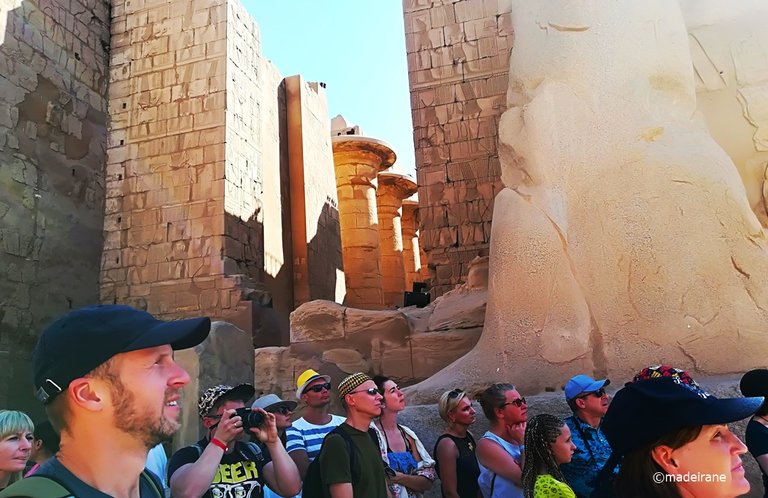
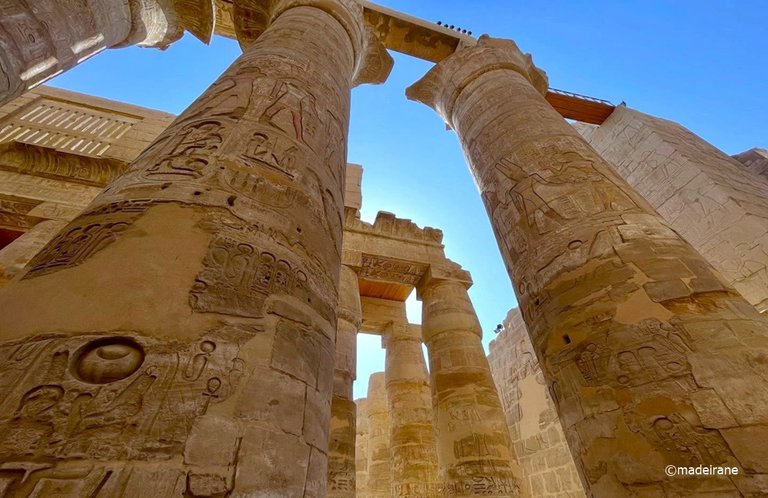
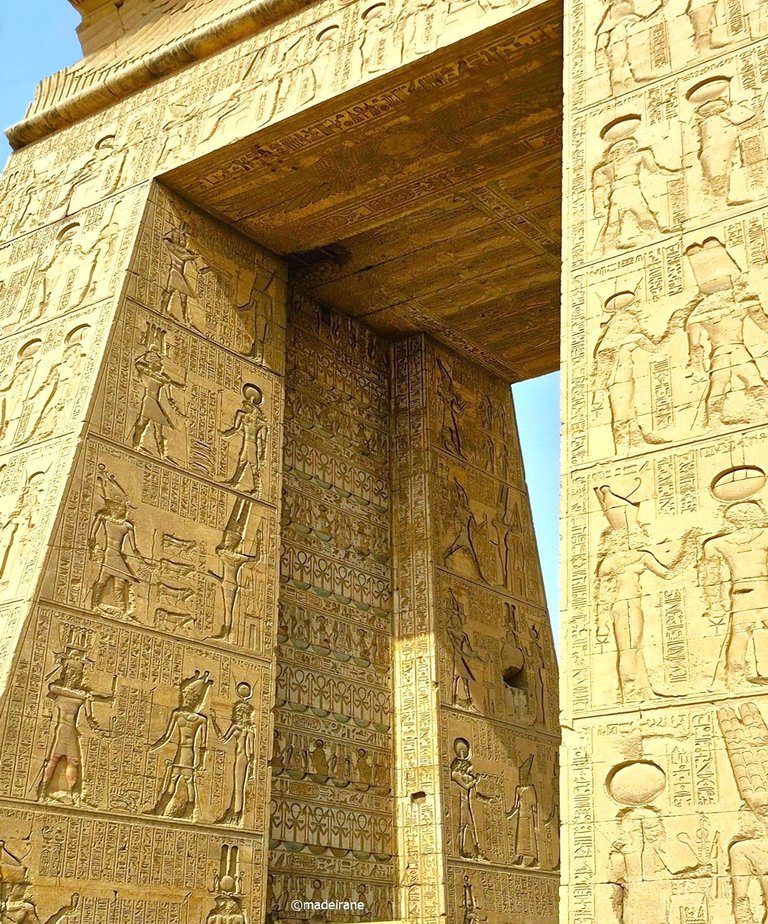
And so we found ourselves in the Great Hall of Columns. It was simply unimaginable! The Hall of Columns left a powerful impression on me! It's the largest hall of columns not only in Egypt, but in the entire world! Its area is approximately 5,000 square meters. It's a veritable forest of enormous columns, 134 of which are arranged in 16 rows. The most beautiful avenue of columns is the central avenue, consisting of 12 columns shaped like an unopened papyrus flower. The columns are approximately 20 meters high, and so thick that if five people held hands, they wouldn't be able to encircle them! The columns are covered in hieroglyphics, depicting scenes from the lives of pharaohs and gods, along their entire height. Commoners were only allowed into the temple courtyard, while only a select few - high-ranking officials, military leaders, and scribes - were allowed into the hall.
Ir taip atsidūrėme Didžiojoje kolonų salėje. Tai buvo tiesiog neįsivaizduojama! Kolonų salė man paliko stiprų įspūdį! Tai didžiausia kolonų salė ne tik Egipte, bet ir visame pasaulyje! Jos plotas yra maždaug 5000 kvadratinių metrų. Tai tikras didžiulių kolonų miškas, iš kurių 134 išdėstytos 16 eilių. Gražiausia kolonų alėja yra centrinė, susidedanti iš 12 kolonų, kurių forma primena neišskleistą papiruso žiedą. Kolonos yra maždaug 20 metrų aukščio ir tokios storos, kad penki žmonės, susikibę rankomis, negalėtų jų apsupti! Kolonos per visą jų aukštį išmargintos hieroglifais, vaizduojančiais scenas iš faraonų ir dievų gyvenimo. Į šventyklos kiemą buvo įleidžiami tik paprasti žmonės, o į salę – tik keli išrinktieji – aukšti pareigūnai, kariniai vadai ir raštininkai.>
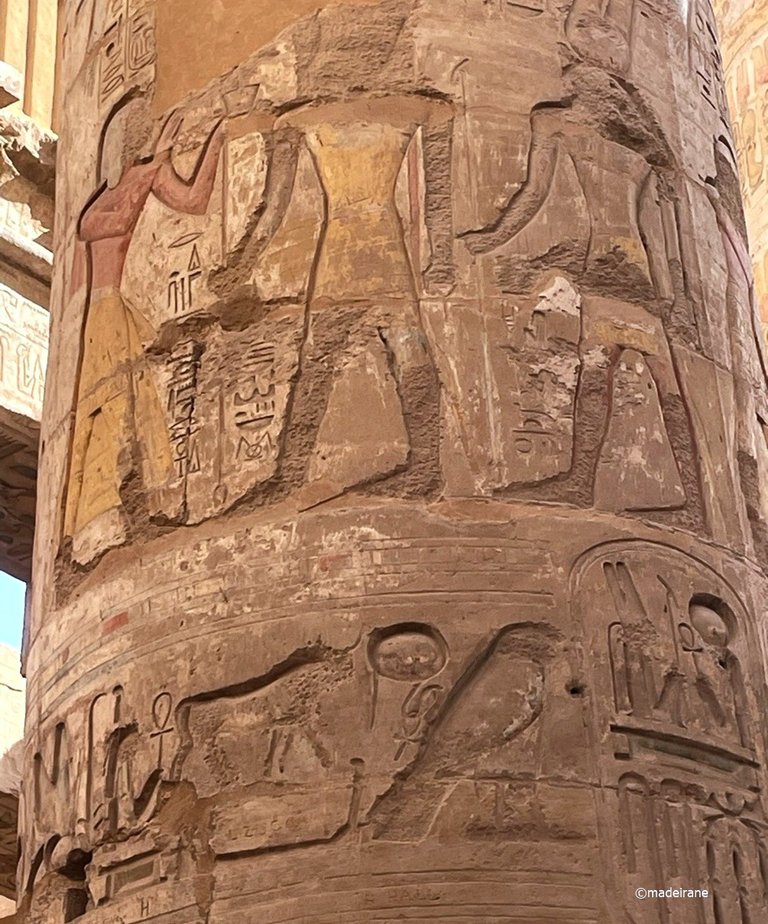
Each drawing has its own name and history. Considering that all of this was created many centuries ago, it's simply unclear what people used to create the paintings. Look, they're in color. They're not just on stone; entire compositions - paintings - are created there. The reliefs create clear contours and strong contrasts of light and shadow.
Kiekvienas piešinys turi savo pavadinimą ir istoriją. Atsižvelgiant į tai, kad visa tai buvo sukurta prieš daugelį amžių, tiesiog neaišku, ką žmonės naudojo kurdami paveikslus. Pažiūrėkite, jie spalvoti. Jie ne tik ant akmens; ten kuriamos ištisos kompozicijos – paveikslai. Reljefai sukuria aiškius kontūrus ir stiprius šviesos bei šešėlio kontrastus.>

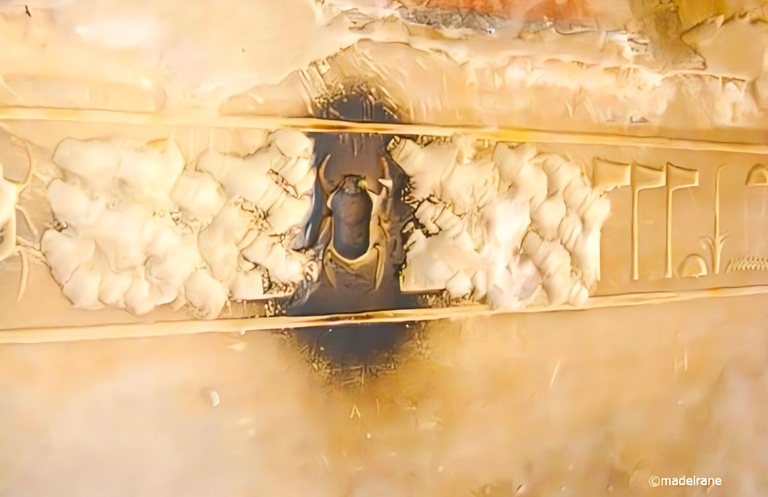
Here's an image of a sacred scarab beetle on the wall. According to legend, you should touch it with your hand and ask for your cherished wish to be fulfilled. Look how dirty it has become from being touched by millions of hands! It's a good thing humanity didn't know about the coronavirus pandemic at that time. I refused to touch it.
Ant sienos kabo švento skarabėjo atvaizdas. Pasak legendos, reikia jį paliesti ranka ir paprašyti, kad išsipildytų jūsų branginamas noras. Pažiūrėkite, koks jis purvinas nuo milijonų rankų prisilietimo! Gerai, kad žmonija tuo metu nežinojo apie koronaviruso pandemiją. Aš atsisakiau jį paliesti.>
We also came to a sculpture of a scarab beetle, revered in Egypt as a sacred deity and a symbol of wealth and good fortune. This sculpture is especially popular among tourists, as it is believed that if you walk around the sculpture counterclockwise seven times, any wish will come true. So tourists walk in circles around the monument.
Taip pat priėjome skarabėjo vabalo skulptūrą, Egipte gerbiamą kaip šventą dievybę ir turto bei sėkmės simbolį. Ši skulptūra ypač populiari tarp turistų, nes tikima, kad jei septynis kartus apeisite skulptūrą prieš laikrodžio rodyklę, bet koks noras išsipildys. Taigi turistai vaikšto ratais aplink paminklą.>


Then we came to two obelisks. The obelisks were erected during the reign of Queen Hatshepsut. They are made of pink granite and reach a height of 30 meters.
Tada priėjome du obeliskus. Obeliskai buvo pastatyti karalienės Hačepsutos valdymo laikais. Jie pagaminti iš rausvo granito ir siekia 30 metrų aukštį.>

This temple fascinated us! I would gladly return to this complex again, but I would independently and slowly admire each column, each painting on it. I don’t think it’s worth mentioning the advantages, because the temple itself is the most important advantage, and the only minus could be the unbearable heat.
Ši šventykla mus sužavėjo! Mielai sugrįžčiau į šį kompleksą dar kartą, bet savarankiškai ir lėtai grožėčiausi kiekviena kolona, kiekvienu paveikslu ant jo. Manau, kad neverta minėti privalumų, nes pati šventykla yra svarbiausias privalumas, o vienintelis minusas galėtų būti nepakeliamas karštis.>

💝💝💝💝💝💝💝💝💝💝
With love, @madeirane
Photos are taken by me.
© 2025
Translated from Lithuanian with DeepL.com (free version)
You can check out this post and your own profile on the map. Be part of the Worldmappin Community and join our Discord Channel to get in touch with other travelers, ask questions or just be updated on our latest features.