
In our amateur chess club, where a group of friends passionate about this noble game gather almost daily in our free time, we often repeat a phrase that has become part of our identity as players: “The threat is stronger than its execution.” For a long time I heard some companions attribute it to Tarrasch, but I was always convinced it came from Aron Nimzowitsch, the great master born in Riga. That conviction stayed with me from childhood through my early youth, years in which I devoted countless hours to studying chess and competing in official tournaments. Eventually, when I came across a book that confirmed my memory, I was able to settle the question and prove that my recollection had been correct.
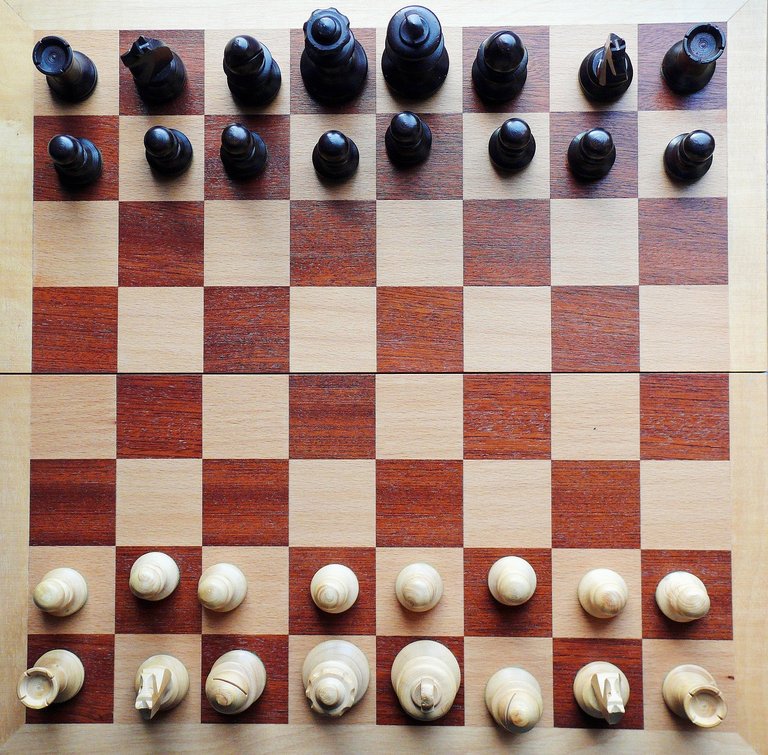
That experience inspired me to write these lines and share with you, friends of @TheChessCommunity, the depth of a sentence that is not merely a clever aphorism but a strategic principle of immense value. Nimzowitsch is rightly regarded as the great theorist of the hypermodern school, and his contribution forever changed the way we understand chess.
The phrase comes alive in our everyday games, especially in positions where we choose to keep the threat hanging rather than carry out the move immediately. That invisible tension creates constant pressure on the opponent, forcing them to calculate variations that may never materialize and keeping them in a state of positional discomfort. Nim present this idea as a passing remark, but as part of a solid theoretical framework that revolutionized chess thinking.

There are two paths to reach a respectable level in chess: playing frequently against strong opponents, which requires time and patience, or studying systematically. I recommend the second path within our community, because it allows us to absorb strategic principles and apply them creatively. Many friends on Hive work hard every day in that direction, and I admire them and gladly join in that shared goal of improving together.
Returning to Nimzowitsch, his famous phrase has influenced not only the history of chess but the very way we conceive of the game. It is striking that Riga was the birthplace of two geniuses so different yet complementary: Aron, the theorist who gave us the hypermodern school, and Mikhail Tal, the magician of sacrifice and boundless imagination. Both represent poles that enrich our passion and deserve to be remembered in future writings.

When Nimzowitsch gained international recognition, the prevailing ideas were those of Steinitz and Tarrasch, centered on occupying the center with pawns. Aron introduced a different vision: the center could be controlled from a distance, with pieces exerting pressure without physically occupying it. That conception opened new strategic possibilities and gave rise to the hypermodern school, which broadened the horizons of the game of chess.
Let us imagine a practical example: we are in the middlegame, our opponent has castled short and we have castled long. Playing Black, we push h6, preparing a pawn advance on the kingside. Yet we hold back the move g5. That unexecuted threat forces the adversary to defend against multiple possibilities, keeps them under tension, and prevents them from relaxing. If we eventually play g5, we give them relief; as long as the threat lingers, they fight against shadows.
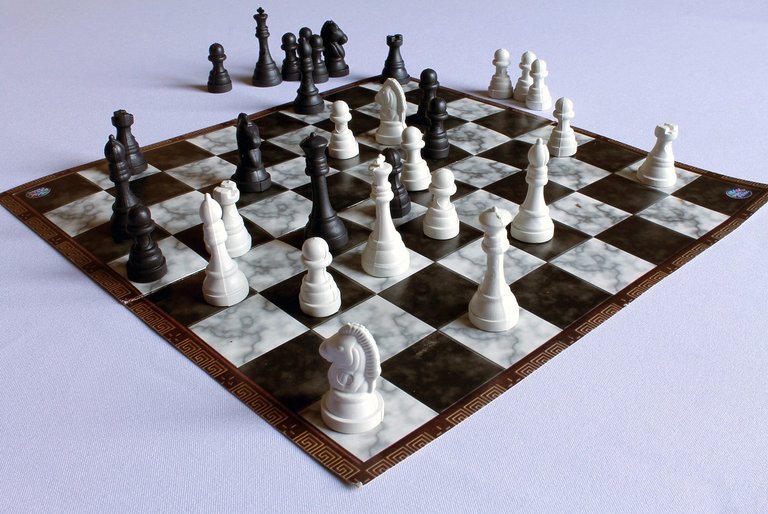
This principle carries psychological as well as positional weight. That is why I recommend to those who have not yet done so that they read My System, Nimzowitsch’s fundamental work. There he develops concepts such as restraint, overprotection, blockade, and prophylaxis—ideas that today form part of the common language of any strong player, but which before him were barely sketched.
In future posts I will share concrete examples of games where these principles are clearly evident. For now, my intention has been to highlight Nimzowitsch’s legacy and remind us that his contribution remains alive on every board where the game is played with passion. I bid you farewell with a warm embrace, wishing you a Merry Christmas and a Happy New Year.
May 2026 bring us success, learning, and above all, wonderful games that continue to feed the passion that unites us.

Text of my own authorship, free of AI.
Images from the free Pixabay archive.

ESPAÑOL
"La amenaza es más fuerte que su ejecución"
En nuestro club de ajedrez amateur, donde un grupo de amigos apasionados por este noble juego nos reunimos casi a diario en nuestro tiempo libre, solemos repetir una frase que se ha convertido en parte de nuestra identidad como jugadores: “La amenaza es más fuerte que su ejecución.” Durante mucho tiempo escuché a algunos compañeros atribuírsela a Tarrasch, pero siempre estuve convencido de que provenía de Aron Nimzowitsch, el gran maestro nacido en Riga. Esa convicción me acompañó desde la infancia hasta mi primera juventud, años en los que dediqué incontables horas al estudio del ajedrez y a competir en torneos oficiales. Finalmente, cuando encontré un libro que confirmaba mi recuerdo, pude zanjar la cuestión y demostrar que mi memoria había sido correcta.
Esa experiencia me inspiró a escribir estas líneas y compartir con ustedes, amigos de @TheChessCommunity, la profundidad de una sentencia que no es simplemente un ingenioso aforismo, sino un principio estratégico de inmenso valor. Nimzowitsch es justamente considerado el gran teórico de la escuela hipermoderna, y su aporte cambió para siempre la manera en que entendemos el ajedrez.
La frase cobra vida en nuestras partidas cotidianas, especialmente en posiciones donde elegimos mantener la amenaza latente en lugar de ejecutar la jugada de inmediato. Esa tensión invisible genera una presión constante sobre el adversario, obligándolo a calcular variantes que tal vez nunca se materialicen y manteniéndolo en un estado de incomodidad posicional. Nim presentó esta idea como una observación pasajera, pero dentro de un marco teórico sólido que revolucionó el pensamiento ajedrecístico.
Existen dos caminos para alcanzar un nivel respetable en ajedrez: jugar con frecuencia contra rivales fuertes, lo cual requiere tiempo y paciencia, o estudiar de manera sistemática. Recomiendo el segundo camino dentro de nuestra comunidad, porque nos permite absorber principios estratégicos y aplicarlos creativamente. Muchos amigos en Hive trabajan duro cada día en esa dirección, y los admiro y me sumo con gusto a ese objetivo compartido de mejorar juntos.
Volviendo a Nimzowitsch, su célebre frase ha influido no solo en la historia del ajedrez, sino en la propia forma en que concebimos el juego. Resulta llamativo que Riga haya sido cuna de dos genios tan distintos y a la vez complementarios: Aron, el teórico que nos legó la escuela hipermoderna, y Mijaíl Tal, el mago del sacrificio y la imaginación sin límites. Ambos representan polos que enriquecen nuestra pasión y merecen ser recordados en futuros escritos.
Cuando Nimzowitsch alcanzó reconocimiento internacional, las ideas dominantes eran las de Steinitz y Tarrasch, centradas en ocupar el centro con peones. Aron introdujo una visión diferente: el centro podía controlarse a distancia, con piezas que ejercieran presión sin ocuparlo físicamente. Esa concepción abrió nuevas posibilidades estratégicas y dio origen a la escuela hipermoderna, que amplió los horizontes del juego de ajedrez.
Imaginemos un ejemplo práctico: estamos en el medio juego, nuestro rival ha enrocado corto y nosotros hemos enrocado largo. Con negras, avanzamos h6 preparando una ofensiva de peones en el flanco de rey. Sin embargo, retenemos la jugada g5. Esa amenaza no ejecutada obliga al adversario a defenderse de múltiples posibilidades, lo mantiene bajo tensión y le impide relajarse. Si finalmente jugamos g5, le damos alivio; mientras la amenaza persista, lucha contra sombras.
Este principio tiene un peso tanto psicológico como posicional. Por eso recomiendo a quienes aún no lo han hecho que lean Mi Sistema, la obra fundamental de Nimzowitsch. Allí desarrolla conceptos como la restricción, la sobreprotección, el bloqueo y la profilaxis—ideas que hoy forman parte del lenguaje común de cualquier jugador fuerte, pero que antes de él apenas estaban esbozadas.
En futuras publicaciones compartiré ejemplos concretos de partidas donde estos principios se evidencian claramente. Por ahora, mi intención ha sido resaltar el legado de Nimzowitsch y recordarnos que su aporte sigue vivo en cada tablero donde el juego se practica con pasión. Me despido con un cálido abrazo, deseándoles una Feliz Navidad y un Próspero Año Nuevo. Que el 2026 nos traiga éxito, aprendizaje y, sobre todo, maravillosas partidas que sigan alimentando la pasión que nos une.
Texto de mi autoría, libre dd IA.
Imágenes del archivo libre de Pixabay.

A pollinator from The Pollen Nation feels this post deserves extra attention!
We appreciate your contribution to the blockchain.
For more information or to reach out to us, join our Discord server!
I deeply appreciate the opportunity that this project gives for these reflections, which humbly aim to help us chess lovers within Hive grow in our level of play. Hugs of light!!!
¡Enhorabuena!
✅ Has hecho un buen trabajo, por lo cual tu publicación ha sido valorada y ha recibido el apoyo de parte de CHESS BROTHERS ♔ 💪
♟ Te invitamos a usar nuestra etiqueta #chessbrothers y a que aprendas más sobre nosotros.
♟♟ También puedes contactarnos en nuestro servidor de Discord y promocionar allí tus publicaciones.
♟♟♟ Considera unirte a nuestro trail de curación para que trabajemos en equipo y recibas recompensas automáticamente.
♞♟ Echa un vistazo a nuestra cuenta @chessbrotherspro para que te informes sobre el proceso de curación llevado a diario por nuestro equipo.
🏅 Si quieres obtener ganancias con tu delegacion de HP y apoyar a nuestro proyecto, te invitamos a unirte al plan Master Investor. Aquí puedes aprender cómo hacerlo.
Cordialmente
El equipo de CHESS BROTHERS