
I begin this story by mentioning that 10 days ago, I shared a post on #waves (https://ecency.com/@ach67/wave-2025126t164915639z) about a squirrel. At that time, my mother told me that the little animal was playing in the backyard. From inside the house, I took a photo, which is the one I presented. When I went out to the backyard to try to take a better picture, the small rodent scurried away among the branches.
I decided to do some research about squirrels around the world. I discovered, based on information gathered from scientific sources, that the global distribution of the common squirrel or red squirrel (Sciurus vulgaris) spans across Europe and northern Asia, excluding the Mediterranean islands. This excludes Cuba from any possibility of being part of their natural habitat.
For this reason, I conducted a search for information on this topic in our country, particularly here in Havana.
Searching on Google, I found a publication from almost a year ago, dated exactly April 2, 2023, at 09:04:38, in the newspaper Tribuna de La Habana, written by Mildred Legra Colón. The beginning of the news article read as follows:
Squirrels Appear in Havana
No one knows who brought them here or how they arrived in different parts of the capital… What matters now is that we must care for them and respect their environment.
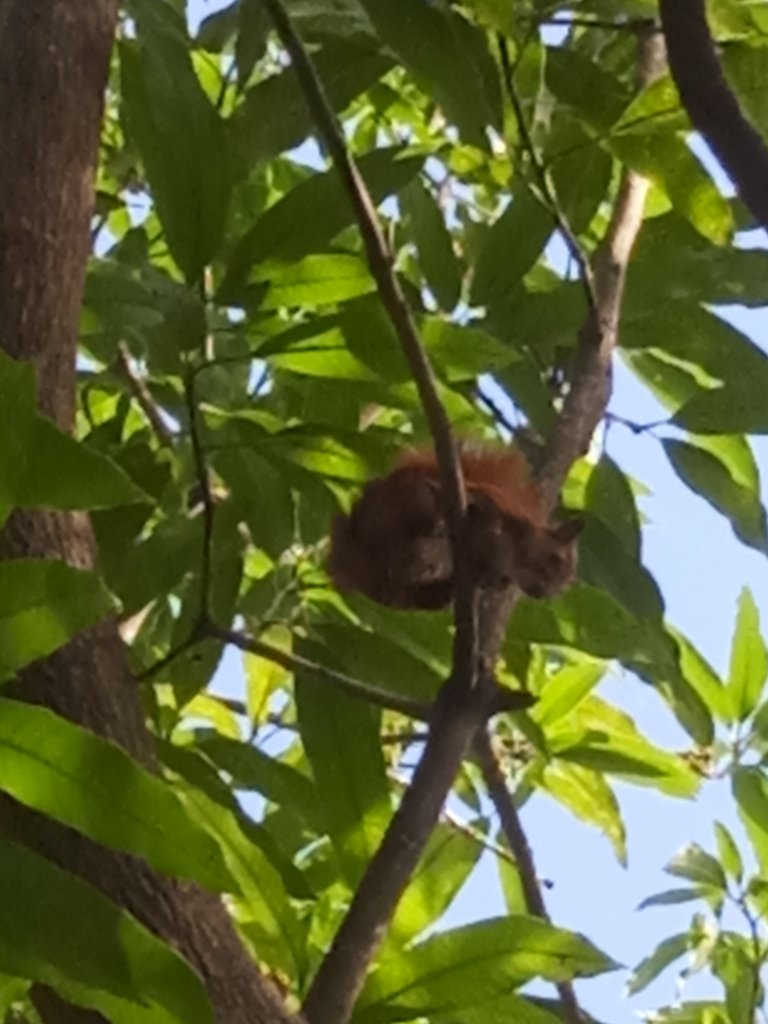
Here are new images of this wonderful little animal in my mother’s backyard:

Diet of the Red Squirrel
According to specialized literature, red squirrels primarily feed on seeds from conifers, acorns, beechnuts, and nuts, although there are variations depending on the region and availability. With the strength of their lower incisors, they can open these types of seeds, a skill they learn and master in just a few seconds. When their preferred seeds are scarce, they opt for different types of fungi, bird eggs, flowers, vegetables, and tree sap.
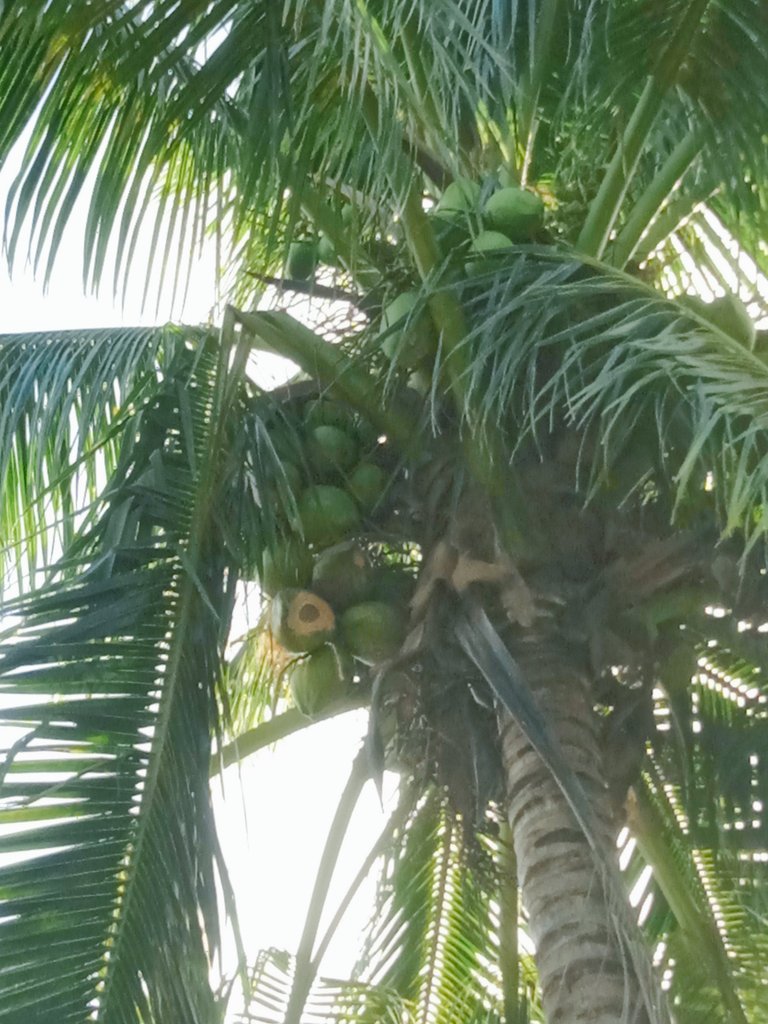
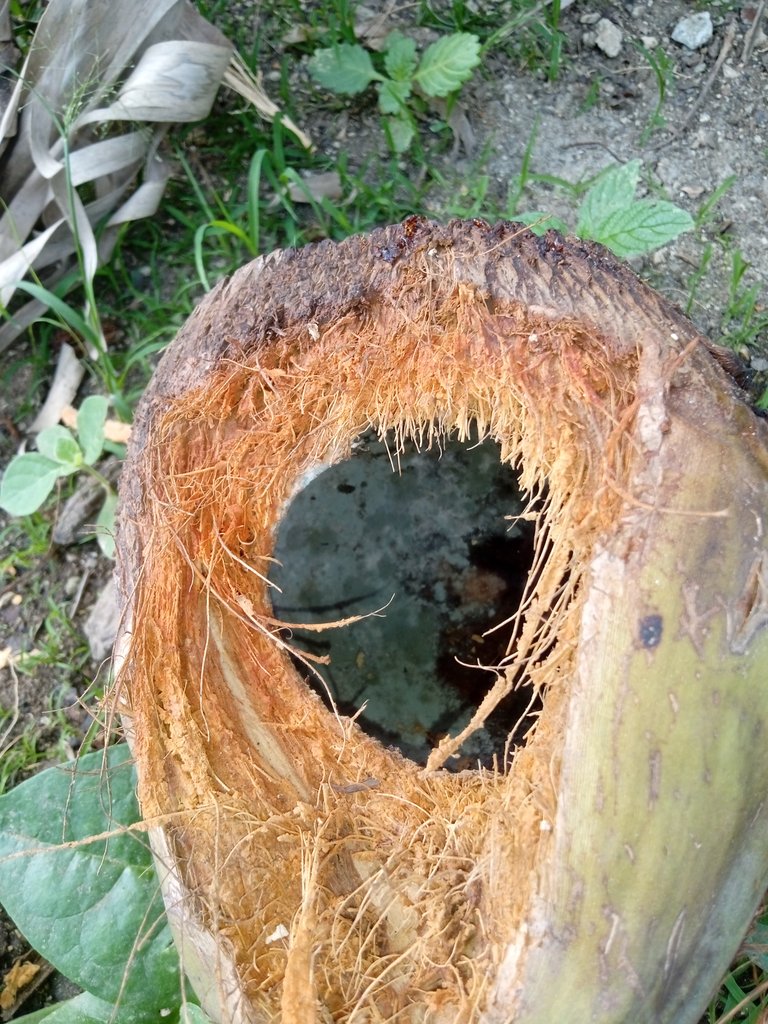
These little animals seem to have adapted perfectly to the Cuban environment. Without access to some of their preferred foods, they have chosen alternatives, such as coconuts, which they pierce to eat the white flesh inside:

What a curious little animal that has found a new habitat—let’s take care of them!
Ardillas en La Habana, nuevo hábitat

Comienzo esta historia refiriendo que hace 10 días subí en #waves (https://ecency.com/@ach67/wave-2025126t164915639z) una información sobre una ardilla. En aquel entonces, mi mamá fue la que me dijo que el animalito estaba jugando en el patio; desde el interior de la casa le realicé una foto, la cual fue la que presenté. Cuando salí al patio para tratar de fotografiarla y obtener una mejor imagen, el pequeño roedor se escabulló entre las ramas.
Decidí hacer algunas averiguaciones sobre las ardillas en el mundo. Me percaté, según la información recopilada en los medios científicos, que la distribución mundial de la ardilla común o ardilla roja (Sciurus vulgaris) se expande por toda Europa y el norte de Asia, excluyendo las islas del Mediterráneo, lo cual excluye a Cuba de cualquier posibilidad.
Por esta razón, realicé una búsqueda de información al respecto en nuestro país, y particularmente aquí en La Habana.
Buscando en Google, encontré una publicación de hace casi un año, fechada exactamente el 2 de abril de 2023 a las 09:04:38, en el periódico Tribuna de La Habana, redactada por Mildred Legra Colón. Textualmente, el inicio de la noticia decía así:
Aparecen ardillas en La Habana
Nadie sabe quién las puso allí ni cómo llegaron a distintas partes de la capital… Lo importante ahora es que hay que cuidarlas y respetar su entorno.
Aquí les muestro nuevas imágenes de este maravilloso animalito en el patio de mi mamá:
Alimentación de la ardilla roja
Según la literatura especializada, las ardillas rojas se alimentan principalmente de semillas de coníferas, hayucos, bellotas y nueces, aunque hay variaciones según la región y disponibilidad. Con la fuerza de sus dientes incisivos inferiores, son capaces de abrir este tipo de semillas, algo que aprenden a hacer y logran en apenas unos segundos. Cuando las semillas de predilección faltan, optan por diferentes tipos de hongos, huevos de aves, flores, verduras y savia de los árboles.
Estos animalitos, al parecer, se han adaptado perfectamente al entorno cubano. Al no tener algunos de sus alimentos preferidos, han optado por otros, como por ejemplo el coco, al cual le hacen un orificio para poder comer la masa blanca que contiene este fruto:

¡Curioso animalito que ha adquirido un nuevo hábitat! Cuidémoslos.