Greetings, dear friends at @holos-lotus.
My children, now that they're grown, understand what I meant when I told them to let go of their anxiety. They're now aware of when they're anxious and have learned to manage it.
But many people have become ill, both physically and mentally, because they didn't know how to manage their anxiety.
I went through that myself.
That's why I want to share what I learned with you: avoiding anxiety isn't about ignoring problems, it's about changing how you relate to them.

The first thing you must learn, and it's fundamental, is that anxiety doesn't originate in the present. It arises from the idea or interpretation you form of the future. You don't suffer because of what is happening to you right now, but because of what you imagine will happen.
When you lose your job, the present problem is the lack of income. Anxiety is the terror you feel when you imagine that you will never find a job again, that you will lose your home, that your family will see you as a failure.
These are movies your mind creates, not facts. Separating the concrete fact from the catastrophic scenario is the first step.

This happens when the mind compulsively jumps ahead. It creates imaginary scenarios, invents threats, exaggerates risks to the extreme, and convinces you that you're being "realistic." You deceive yourself into thinking that by dwelling on a problem, by anticipating everything bad, you're protecting yourself. But it's the opposite.
This mental process doesn't prepare you better; It paralyzes you, exhausts you, and robs you of the resources—calm, clarity, energy—you need to face the real situation when it arrives.
Anxiety is like trying to pay a debt you don't yet have, with money you haven't earned.

At its core, anxiety is an attempt at control. But it's a desperate and futile attempt to control what's beyond your control. You want to control a future outcome, someone else's reaction, an uncertain event.
That's the path to guaranteed frustration. The key is to redirect that impulse for control toward where it truly has power. You must learn to control what depends on you: your responses to what is happening to you right now, your character, your daily habits, your discipline, and the care of your body and mind.
And you must learn to actively let go of what is not in your hands: what has not yet happened, the opinions of others, the unexpected events of the world.
Your circle of control is small, but it is real. The circle of your worries is immense, but it is illusory. Focus on the former and stop feeding the latter.
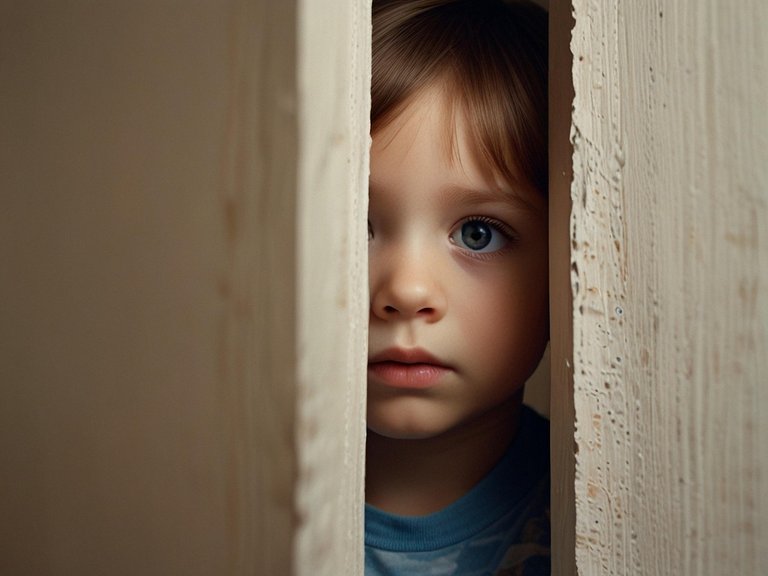
When you manage, with practice, to control the machinery of anxiety, everything changes. It's not that the problems disappear, but that you reclaim your presence.
You will be able to live and enjoy the present, because your mind is no longer hijacked by a terrifying future that only exists in your head. And, paradoxically, from that calm, you will be able to truly plan the future, with much greater effectiveness.
A plan made from anxiety is reactive, short-sighted, and dictated by fear. A plan made from calm is proactive, strategic, and based on real possibilities. Avoiding anxiety isn't irresponsible; it's being responsible enough not to waste your present life suffering over a tomorrow that doesn't yet exist, and which probably won't be as terrible as your fears make it out to be.
Peace isn't the absence of challenges; it's the presence of a mind that knows where it needs to be: here, now, dealing with what it can handle.
Leer en español
Saludos, estimados de @holos-lotus.
Mis hijos, ahora que han crecido, entienden a lo que yo me refería cuando les decía que dejaran la ansiedad. Ahora tienen conciencia de cuando están ansiosos y han aprendido a manejar su ansiedad.
Pero hay muchas personas que han llegado a enfermarse, física y mentalmente, por no saber manejar su ansiedad.
Yo mismo pasé por eso.
Por eso quiero compartir con ustedes lo que aprendí: evitar la ansiedad no es ignorar los problemas, es cambiar la forma en que te relacionas con ellos.
Lo primero que debes aprender, y es fundamental, es que la ansiedad no nace en el presente. Nace de la idea o interpretación que te haces del futuro. No sufres por lo que te está ocurriendo en este instante, sino por lo que imaginas que va a ocurrir.
Cuando te quedas sin trabajo, el problema presente es la falta de ingresos. La ansiedad es el terror que sientes al imaginar que nunca más encontrarás empleo, que perderás tu casa, que tu familia te verá como un fracasado.
Son películas que tu mente produce, no hechos. Separar el hecho concreto del escenario catastrófico es el primer paso.
Eso ocurre cuando la mente se adelanta de forma compulsiva. Crea escenarios imaginarios, inventa amenazas, exagera los riesgos al máximo, y te convence de que estás siendo "realista". Te engañas pensando que al darle mil vueltas a un problema, al anticiparte a todo lo malo, te estás protegiendo. Pero es al revés.
Ese proceso mental no te prepara mejor; te paraliza, te agota y te roba los recursos —calma, claridad, energía— que necesitas para enfrentar la situación real cuando llegue.
La ansiedad es como intentar pagar una deuda que aún no tienes, con un dinero que no has ganado.
En el fondo, la ansiedad es un intento de control. Pero es un intento desesperado y fútil de controlar lo que no depende de ti. Quieres controlar un resultado futuro, la reacción de otra persona, un evento incierto.
Ese es el terreno de la frustración garantizada.
La clave está en redirigir ese impulso de control hacia donde sí tiene poder. Debes aprender a controlar lo que depende de ti: tus respuestas a lo que te sucede ahora mismo, tu carácter, tus hábitos diarios, tu disciplina, el cuidado de tu cuerpo y tu mente.
Y debes aprender a soltar, activamente, lo que no está en tus manos: lo que aún no ocurre, la opinión de los demás, los imprevistos del mundo.
Tu círculo de control es pequeño, pero es real. El círculo de tus preocupaciones es inmenso, pero es ilusorio. Enfócate en el primero y deja de alimentar al segundo.
Cuando logras, con práctica, controlar esa maquinaria de la ansiedad, todo cambia. No es que desaparezcan los problemas, sino que recuperas tu presencia.
Podrás vivir y disfrutar del presente, porque tu mente deja de estar secuestrada por un futuro aterrador que solo existe en tu cabeza. Y, paradójicamente, desde esa calma, podrás planificar el futuro de verdad, con mucha más efectividad.
Un plan hecho desde la ansiedad es reactivo, cortoplacista y dictado por el miedo. Un plan hecho desde la calma es proactivo, estratégico y se basa en posibilidades reales.
Evitar la ansiedad no es ser irresponsable; es ser lo suficientemente responsable como para no malgastar tu vida presente sufriendo por un mañana que aún no existe, y que probablemente no será tan terrible como lo pintan tus miedos.
La paz no es la ausencia de desafíos, es la presencia de una mente que sabe dónde debe estar: aquí, ahora, ocupándose de lo que sí puede manejar.
The problem is when anxiety didn't avoid me 😂