INTRODUCTION
Coming Home Is A Second Mission: When astronauts return to earth after spending months aboard the International Space Station (ISS), the mission is not truly over. While the world watches their safe landing, a quieter and more complex journey begins - the process of recovery. Life in microgravity changes the human body, brain, and mind in profound ways. Adjusting back to earth’s gravity is often more challenging than adapting to space itself: From weakened muscles to mental readjustment, returning home becomes a second mission that requires patience, training, and resilience.
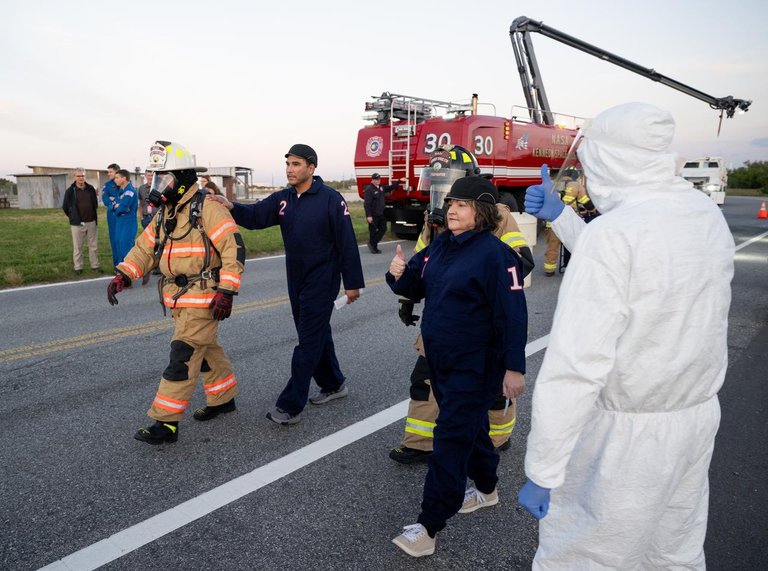
Image credit: NASA
WHAT HAPPENS TO THE HUMAN BODY AFTER SPACEFLIGHT:
In space, the human body no longer works against gravity. Over time, this leads to significant physical changes that become evident immediately after landing.
- Muscle Weakness and Loss of Strength: Without gravity constantly engaging muscles, astronauts experience muscle atrophy, especially in the legs, back, and core. Upon return, simple activities like standing or walking can feel exhausting. This is why astronauts are often assisted out of their spacecraft.
- Bone Density Reduction:
Bones rely on weight-bearing activity to remain strong. In microgravity, astronauts lose bone minerals, increasing the risk of fractures. Recovery on earth involves months of carefully monitored physical rehabilitation. - Cardiovascular Challenges: In space, blood and bodily fluids shift toward the upper body. When astronauts return to Earth, their cardiovascular system struggles to adapt, sometimes causing dizziness, fatigue, or fainting when standing.
- Balance and Coordination Problems: The inner ear, which helps control balance, becomes confused after long exposure to microgravity. As a result, astronauts may feel unsteady or disoriented for days or weeks after landing.
HOW SPACEFLIGHT AFFECTS THE HUMAN BRAIN: Spaceflight doesn’t only affect muscles and bones, it also influences how the brain functions and adapts.
- Fluid Shifts and Brain Pressure:
In microgravity, fluids move toward the head, increasing pressure inside the skull. Scientists believe this contributes to changes in brain structure and vision problems experienced by some astronauts. - Vision and Sensory Changes: Some returning astronauts report blurred vision or difficulty focusing. This condition, linked to spaceflight, highlights how sensitive the brain is to prolonged weightlessness.
- Relearning Gravity: The brain must relearn how to interpret signals related to movement and balance. Walking, turning, and even judging distances can feel unfamiliar at first, requiring time and therapy to normalize.
THE PSYCHOLOGICAL AND MENTAL IMPACT OF RETURNING TO EARTH:
The mind also undergoes a major transition after months in space. Emotional readjustment living in a confined environment, far from earth, demands intense mental discipline. Upon return, astronauts may experience mood swings, fatigue, or emotional sensitivity as they readjust to everyday life.
- Sensory Overload:
After months of silence and routine, the earth can feel overwhelming. Bright lights, crowds, noise, and constant activity may cause stress or discomfort initially. - Social and Family Reintegration:
Reconnecting with family and society is joyful but not always immediate. Astronauts often describe feeling slightly “out of sync” with normal life during the early days of return.
THE BODY-MIND CONNECTION; (Why Recovery Takes Time):
Physical weakness and mental strain are deeply connected. A tired body can affect mood and concentration, while psychological stress can slow physical recovery.
For this reason, astronaut rehabilitation programs address both physical and mental health. Medical teams, physiotherapists, and psychologists work together to ensure a safe and complete recovery.
This holistic approach underscores a key truth: human health is not just physical or mental; it is both.
WHAT SPACE TRAVEL TEACHES US ABOUT HUMAN RESILIENCE:
Despite the challenges, astronauts do recover. Their ability to adapt highlights the incredible resilience of the human body and mind. Research from space missions continues to benefit life on earth, improving treatments for bone loss, balance disorders, and mental health conditions. As humanity plans longer missions - to the Moon, Mars, and beyond - understanding these effects becomes more important than ever.
CONCLUSION
(Returning Home Is Part of the Journey):
Space exploration does not end when astronauts land back on earth. The real test often begins afterward, as the body, brain, and mind work together to readjust to gravity and normal life. Their recovery reminds us that while humans are capable of extraordinary feats, we remain deeply connected to our environment. Gravity, movement, and human connection are essential to who we are.
💬 Let’s Talk
If months in space can change the human body and mind this deeply, do you think humans are truly ready for long-term missions to Mars?
If an opportunity to visit the International Space Station is offered to you fully paid for as a tourist, would you accept and be excited about the journey? Please share your reasons for accepting or rejecting the offer.
✍️ Article Credit
Written by: Ifreke Oboh
Source: Original content by the author. I'm passionate about science, technology, life, faith and human experience. If you enjoyed this piece, kindly follow for more.
Intelligent article. One should research widely before venturing into Space travels to minimize universal consequences.
In addition to research, astronauts are highly disciplined and fit. Apart from death caused by equipment failure, there's no record of death during space missions