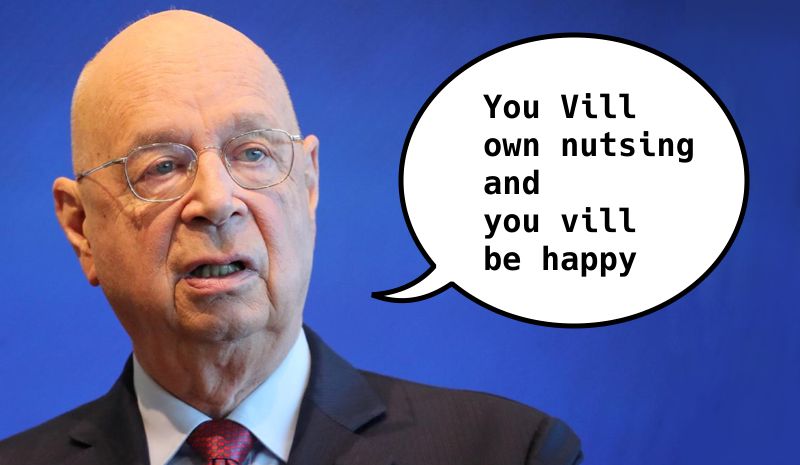
There is one BIG problem with 15 minute cities. It is, that many people would probably really like such a living arrangement.
As long as there wasn't the overlord, everything being watched by big brother, and being confined to your little block, i probably would like it. I really do not like using a car. I really do not like that all the green space gets paved over for parking lots. So much about a 15 minute city sounds great.
So, what if we made our own 10 minute cities?

Cities are bad places for humans
People in cities live lonely lives, surrounded by people. Most people do not know their neighbors. Or worse, really dislike their neighbors. There is no connection, and there is little reason to get connected.
There is so much structure and not enough nature to balance it. Humans really need nature or they start going insane. "Get out and touch grass".
There is no support structure, except for heartless bureaucratic systems. In a small community, everyone knows the lay-a-bouts, and the hard workers. It is easy to know if you are supporting someone who just needs a little help, and supporting someone, who will just need more supporting. In the city, when you go to social services, you are just a number. And what they have in the computer on you is god. Even if it is completely wrong, the person behind the desk believes it over you. Even to the point of "our computer says you are dead."
Although there is, usually, more opportunity for employment in the cities, it comes at the cost of not being able to grow your own food. And this is the big trap. You are stuck working in order to eat.
When the factory left, the town collapsed
Have you heard of medium sized towns where Wallymart decided to build a store? Not only did Wallymart decide to build outside the city center, disrupting the flow of traffic, especially foot traffic in downtown. And Wallymart puts all the small grocery stores out of business. And THEN Wallymart shuts down this store, leaving the medium sized town without any source of food.
This kind of thing has also happened when THE factory shut down. Similarly when the mine shut down. The source of income for the town just left. And so, clientele for the service economy dried up. And the town dried up.
The factory was the town. But, the owners of the factory (corporation) had no concern for the town, and then used them for what they could get, and then discarded them.
Would it be better if the town owned the factory? The problem heretofore, is that the town was usually not cohesive enough to be an owner.
What if the factory owned the town? Well, there have been a few of these. Where the factory built a town for their employees to live in. All kinds of problems arise, like people selling their houses, and so the company doesn't have space for their workers anymore. (or not being able to sell their houses, so they had no equity in what they maintained)
The problem is the management
The idea of a 15 minute city has many good aspects, the problem is the management.
The management has to care for the town, and is in alignment with their life direction/growth. Mr. Clown (pictured above) wants complete control over the people and their production. People not functioning exactly how they expect is terrifying to these mother WEFers.
The way that big brother manages people causes a lot of stress. So, even if they do a good job, their management style is achieves poor results.
However, letting the town have a management, and the factory have a management, and letting the people do whatever usually ends up a real mess. The town, the business and the people need to be all on the same page. They need to share the same goals / be going in the same direction. And they all need to recognize that they are all in this together.
So, if we were forming an intentional community, we would not be that different from the 15 minute cities. Except for some EXTREMELY IMPORTANT differences. The people need to decide, and all be on board, with the direction they are choosing to go. The town, the company and the people need to be as one. (and this can be extremely difficult with our current models. The town's people are the board? above the CEO, which is above the workers, which are the town's people?)
But this mess is so much better than the CEO being appointed by some mother WEFer group that has no care for the people it is ruling. In fact, they seem to want 90% of the population to just die. That is not the kind of management structure i want to be in. "I think my boss is out to get me. Oh that is just conspiracy thinking… No, you are right, he is out to off you. The last guy lasted two weeks. His ashes are in that urn over there."
In the future, your most important decision will be which community you join. There are going to be 10s of thousands of communities and they are all going to try to solve this management issue, in different ways. Find the group of people that think similarly to you. That you get along with. Think, can i work with these people when times get hard?
Other than that, things will be very similar to 15 minute cities open air prisons. Wait, strike that, they will be similar to Amish communities who have been working on this for much longer.
Having been an avid bicyclist until recently, a 15 minute city had always had some appeal to me. More recently my joining a communal car sharing organization, CommunAuto, made the concept of owning nothing and being happy seem less intimidating.
My feeling is that the big difference between the WEF Elite's outlook and that of the common Joe is that the elite does not trust the rule of the mob while the mob does not trust the authoritarian rule of the elite. In that regard we are in agreement that a 15 minute city under mob control would be preferable to one controlled by elites; if your opinion was understood by me correctly.
I really hope that we can get better than mob rule, but yes.
We need to keep under the maximum number of connections for people. Like 100 people per "city". So, that we are not thinking us vs them, when trying to vote for directions in city management.
And i am sure that we will find more rules, that will seem like common sense, once they are verbalized.
Yes, things like car sharing … well, you have to slow down your life. But then, after, it seems like it was going too fast in the first place.
And another thing to think about. If they environmentalists are actually concerned about the world, why aren't we all riding e-bikes?
Only takes two to tango.
Edit:
My table saw digs into my back when I'm packing it around on the ebike. Also, hauling 16 4x4's for shed posts on an ebike just isn't possible.
Yes, i remember the pain of carrying my tools on my back on my bicycle.
However, you and i know that i was referring to commuter travel, not things that require a truck or a pickup. :-P Imagine trying to deliver food to cities on an e-bike
False. I saw my first aquaponic system some years ago, installed in a 3bd apartment with 3 2000 gallon tilapia tanks entirely within their rented space. They produced commercial quantities of crops and tilapia without any soil, and although they did use the bank of windows in the LR for light, they also used LEDs. Aquaponics can be used to produce more than enough food for the family entirely within the dwelling in which they live.
These communities, apart from their famous aversion to novelty, tend to have not 'a' company, but to have almost as many companies as there are families. This is much better than a 'company town' IMHO. Gilchrist, Oregon was a logging town built by the landowner logging the surrounding hills. It had a bowling alley, a movie theater, restaurants, all the amenities folks wanted in small town in the 1930s. Then the trees were all logged, and the logging enterprise went bankrupt as the landowner took the proceeds of the sale of the lumber and retired. Last I saw the town of Gilchrist was for sale for ~$1M. Lots of empty houses, businesses, and everything returning to a state of nature, like Chernobyl or smth.
This doesn't happen to Amish communities. If Billy Joe Bob's farm goes belly up, Thurston buys it and puts it back into production. Meanwhile, the dozens of other farms are still in operation and folks that work there or own them are buying that lovely craftsman furniture from the local carpenter, custom tailored pants and dresses in any color you like, as long as it's black, and the variety of other products and services the crafty provide small towns.
Decentralized means of production well enable this same dynamic. Maybe Billy Joe Bob got a hankering for novelty and started manufacturing widgets with his new 3D printer, and was so enamored of that process he let the farm languish. In decentralized communities folks can share their doorbell camera video with their neighbors instead of the NSA, keeping track of any outlanders or local idle youth, like a good village should. People with CNC machines on their kitchen tables can make kitchen tools, like shears and cutlery, while a local concrete former can make carbon doped slabs to serve as supercapacitors that store the electricity from the solar panels printed on recycled PET beverage containers with graphene based inks folk hang on their roofs or off their balconies, and the graphene can be made from methane produced by the manure digesters at the local farm with 40w lasers. Ordinary inkjet printers are all that are needed to print solar panels like that today. Rather than recreating the company town and the necessary hierarchy such an industrial complex requires, like Gilchrist, modeling a community on the Amish society in which folks have small production enterprises that support each other is a far more natural societal structure that is also much more robust and resistant to failure.
Thanks!