My blog at blog.theolujay.dev might have been inaccessible to you if you’re not in the US or UK or using a VPN. Since I plugged in my own domain to Hashnode, I almost never could visit my own page without a VPN. I knew I followed the setup instructions right, so after feeling frustrated for so long, I concluded that Hashnode was down or something… yet I resisted defeat, went down a rabbit hole, and found something fascinating.
I’ve been learning about DNS and cloud technologies lately. Problems that arose at work have me figuring out things I might never have outside the job. And so when the internet downtimes we experienced lately occured - think AWS and Cloudflare - I could fairly understand the explanations for what happened. Even at that, I didn’t quite realize how big of a deal Cloudflare is today until they turned out to be the answer to the problems with my blog.
Hashnode was apparently serving my blog from Vercel, but the DNS path from where I’m from, Nigeria, to that Vercel edge location was basically trash. I mean, it somehow wasn’t working. So even when I’d curl https://blog.theolujay.dev, it would just stall and nothing would happen. Perhaps it was my ISP, but I figured that whatever traffic route it was taking wasn’t cutting it. The VPN “fixed” it because, you know, it teleported my traffic to a different location, which was usually the US, where Vercel’s edge was fine.
I surely couldn’t write to Hashnode or my ISP to move the world for me, just because I was starting to write again. Down the hole I began to dig to find answers, I realized that Cloudflare is perfectly positioned for this type of problem. And that’s how I started to read and learn more about them and this whole “Connectivity Cloud” concept. Prior to this situation of mine, I had already been inspired by their explanation of the Cloudflare outage on November 18, 2025.
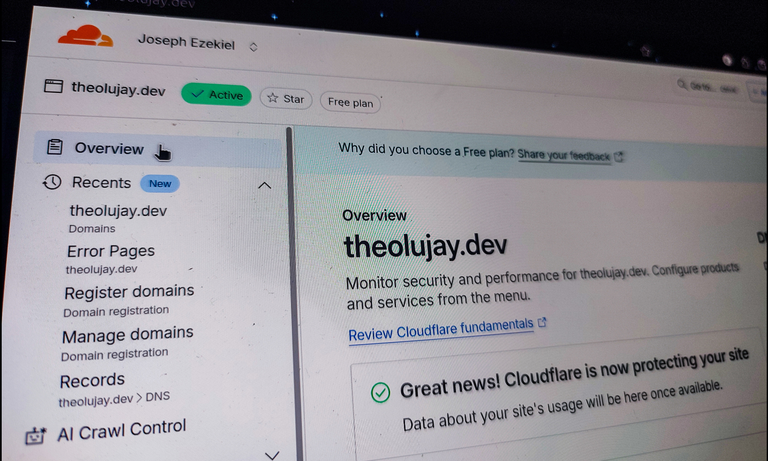
Namecheap is my domain registrar. I was using their DNS system, which wasn’t helping me out. I signed up on Cloudflare, got new nameservers from them, and added them to my domain settings on Namecheap. After it took a while to activate, my blog was now accessible without VPN. It really was as easy as that.
In other words, DNS queries for my domain now hit Cloudflare’s Anycast network (a nearby data center) and pull content from Hashnode/Vercel over their network. And then my stuff is accessible from Cloudflare’s edge. So apparently, Hashnode wasn’t the problem. It was a routing failure between where I am and their infrastructure.
Originally published at blog.theolujay.dev